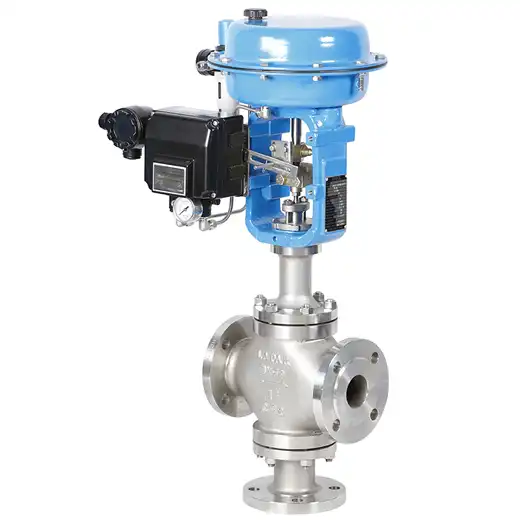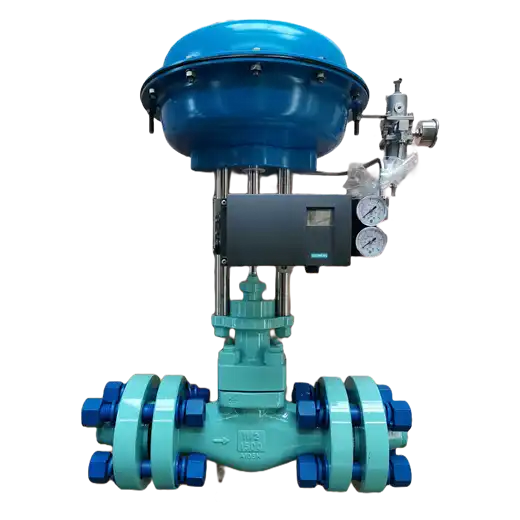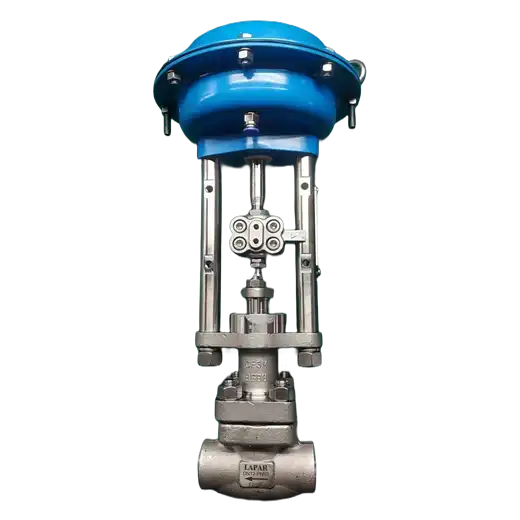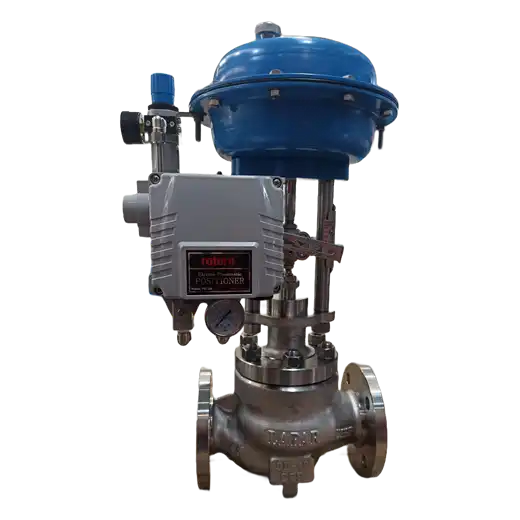
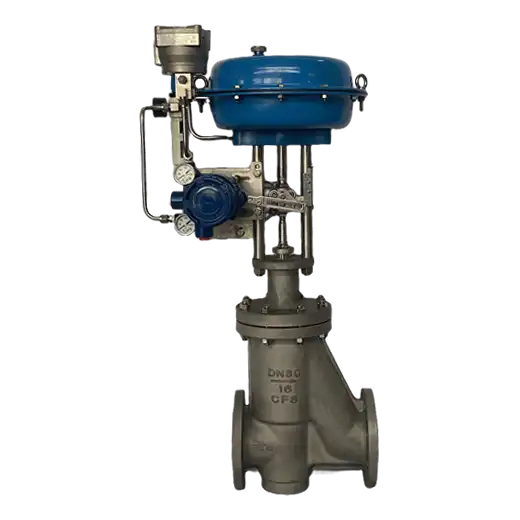
Fluoropolymer (PFA, FEP, PTFE, PVDF) lined bellows control valve is bellows sealed globe control valve complying with emission standard ISO15848 & TA-LUFT. All wetted parts are fluorine lining. The lining is nested on the valve body, which is firm and not easy to fall off. It can withstand certain negative pressure and can be used for gas medium with low fugitive packing. The valve is usually fluorine lined. In order to adapt to high pressure conditions it also can use Hastelloy C as bellows material.
It is used for the regulation and control of corrosive, harmful, pure and small amount of solid media in chemical, pharmaceutical and other industries.
Product Description
Corrosive service and emission control are usually treated as separate problems, and in aggressive chemical duty they occur together. A standard stainless control valve may be mechanically correct and still be consumed by hydrochloric acid, wet chlorine, hot caustic or aggressive solvent mixtures, because the alloy that carries the pressure is the same alloy exposed to the fluid. Separately, the stem packing is the one place where a control valve is designed to allow relative motion, and therefore the one place where fugitive emission is expected and tolerated. On toxic, carcinogenic or highly odorous fluids, that tolerance is no longer acceptable.
The lining addresses the first problem by placing a chemically inert barrier between the fluid and the structural metal. Fluoropolymer linings — PFA, FEP, PTFE and PVDF — cover a wide chemical envelope, and the resin is selected against the actual fluid, concentration and temperature rather than against a generic corrosion chart. PTFE and PFA offer the broadest chemical resistance and the highest temperature ceiling of the group; FEP is similar chemically with a lower temperature limit; PVDF brings better mechanical strength and abrasion resistance within a narrower chemical and thermal window. Because lining is a barrier and not a coating, lining thickness, permeation behavior and the mechanical anchoring of the liner to the body all matter as much as resin selection.
The bellows addresses the second problem by eliminating the sliding stem seal. A welded bellows cartridge is sealed to the stem and to the bonnet, so the process fluid is contained by a static metal boundary instead of a dynamic packing set. Stem leakage is reduced to essentially zero for the life of the bellows, which is the reason this construction is specified on toxic, carcinogenic and high-value fluids, and on any service covered by a fugitive emissions monitoring program. A packing set is retained above the bellows as a secondary barrier and as a monitoring point, and bellows fatigue life is a function of stroke length and cycling frequency, so it must be considered during selection rather than assumed. Seat leakage is classified separately per ANSI/FCI 70-2, and body pressure rating follows the metal shell, not the lining.
Key Features
- Four lining resin options: PFA, FEP, PTFE or PVDF selected against the actual fluid, concentration and temperature — not a single generic "acid resistant" specification.
- Fully lined wetted surfaces: the liner covers the body flow path and seating area, so the structural metal never contacts the process fluid.
- Welded bellows stem seal: a static metal boundary replaces the sliding packing seal, reducing stem leakage to essentially zero for the bellows service life.
- Secondary packing barrier: a conventional packing set above the bellows provides backup containment and a detectable indication point in the event of bellows failure.
- Fugitive emissions compliance path: the construction supports zero-leakage requirements and emissions monitoring programs on toxic, carcinogenic and volatile fluids.
- Corrosion resistance with structural strength: the metal shell carries the pressure rating per ASME B16.34 while the liner carries the chemical duty.
Typical Applications
- Hydrochloric, sulfuric and nitric acid service — acid dosing, pickling lines and acid recovery where standard stainless alloys are attacked.
- Caustic and chlor-alkali duty — hot caustic, brine and wet chlorine service in chlor-alkali and pulp bleaching applications.
- Aggressive solvent and halogenated hydrocarbon service — fluids that attack both metallic and elastomeric components.
- Toxic and carcinogenic fluid control — where stem leakage is a personnel exposure issue, not merely a housekeeping issue.
- High-value and high-purity chemical processing — pharmaceutical and fine chemical service where product loss and contamination are both unacceptable.
Lined valves fail for predictable reasons, and almost all of them trace back to selection rather than manufacture: a resin specified without checking temperature, a liner specified without considering permeation, or a bellows specified without checking stroke and cycle count. We select the lining resin against your fluid, concentration and temperature envelope, confirm the shell rating against your line class, and check the bellows life against your stroke and cycling duty. The result is a valve whose corrosion resistance and emission performance are both specified, not assumed.
Technical Specifications
| Valve Size | NPS 1 – NPS 8 / DN 25 – DN 200 |
|---|---|
| Pressure Class | ASME Class 150 to 300; DIN PN10, PN16, PN25, PN40 |
| Operating Temperature | Lining dependent: PVDF approx. -20 to +120 °C; PTFE, PFA and FEP approx. -20 to +180 °C |
| Lining Material | PFA, FEP, PTFE, PVDF |
| Body Material | Ductile iron or carbon steel shell with fluoropolymer liner; stainless shell on request |
| Process Connection | Flanged, Custom |
| Body Style | Straight (Globe), Angle |
| Bonnet | Standard, Extended |
| Stem Seal | Welded Bellows Cartridge with Secondary Packing |
| Trim | Lined plug and seat; characterized for linear or equal-percentage control |
| Seat Leakage | Class IV, Class V, Class VI per ANSI/FCI 70-2 (lining and seat dependent) |
| Flow Characteristics | Linear, Equal Percentage, Quick Open, Custom |
| Critical Service | Corrosive, Toxic / Carcinogenic, Zero Fugitive Emission, Aggressive Solvents, High Purity |
| Actuator | Pneumatic Diaphragm, Piston, Electric |
| Accessories | Positioner, Position Transmitter, Limit Switch, Solenoid Valve, Bellows Failure Indicator, Air Filter Regulator |
| Certifications | ANSI/ISA, ASME, PED, ATEX, SIL capable |
| Media | Acids, Alkalis, Solvents, Halogenated Fluids, Aggressive Liquids |
| Industries | Chemical & Petrochemical, Chlor-Alkali, Pharmaceutical, Fine Chemicals, Metals & Mining, Pulp & Paper, Water Treatment |
Frequently Asked Questions
Which lining resin should I choose: PFA, FEP, PTFE or PVDF?
Selection is driven by fluid, concentration and temperature. PTFE and PFA offer the broadest chemical resistance and the highest temperature capability of the four. FEP is chemically similar with a lower temperature ceiling. PVDF offers better mechanical strength and abrasion resistance within a narrower chemical and thermal window. The resin should be matched to your actual service conditions, not selected generically.
Why use a bellows seal instead of standard packing?
Packing seals a sliding stem, so some leakage is inherent and increases with wear. A welded bellows replaces that dynamic seal with a static metal boundary, reducing stem leakage to essentially zero. It is specified where the fluid is toxic, carcinogenic, high-value, or subject to a fugitive emissions monitoring program.
Does the lining affect the pressure rating?
No. The metal shell carries the pressure and is rated per ASME B16.34. The lining determines chemical compatibility and maximum operating temperature, not the pressure class. Liner collapse resistance under vacuum or thermal cycling is a separate consideration that should be raised if your service includes either.
How long does the bellows last?
Bellows fatigue life is a function of stroke length and cycling frequency, not calendar time. A throttling valve with a short stroke and high cycle count works the bellows harder than a valve that moves rarely. Bellows life should be checked against your expected stroke and cycling duty during selection.
Can this valve handle abrasive or slurry service?
Fluoropolymer linings are not primarily abrasion-resistant, and fine flow passages are vulnerable to particulate. Among the four, PVDF offers the better mechanical and abrasion resistance. For genuinely abrasive slurry duty, an unlined valve with a hardened trim, or a different valve type entirely, is usually the better answer.