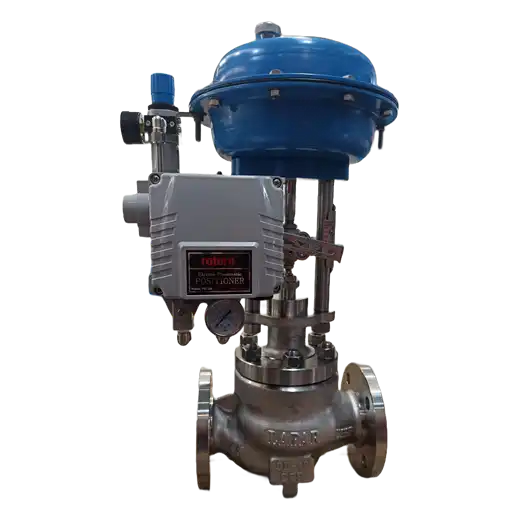
Single Seat Control Valve for Continuous Modulation and Stable Process Regulation in General Service Applications
Product Description
Single seat control valves are fundamentally designed as continuous modulation devices,. Their primary function is to provide precise, repeatable, and stable throttling of fluid flow in response to dynamic process signals from controllers, maintaining critical variables such as pressure, temperature, level, or flow rate within tight tolerance bands during normal operation. The single unbalanced plug-and-seat interface is engineered specifically for proportional positioning across the full stroke range, with characterized trim geometries that deliver predictable inherent flow characteristics (linear, equal percentage, or parabolic) essential for closed-loop stability. While these valves can achieve tight shutoff as a secondary benefit when fully closed, their core value lies in modulation performance: low hysteresis, high resolution, minimal deadband, and consistent gain across turndown. Modern designs address historical limitations of unbalanced trim through optimized stem guidance, low-friction packing, and matched actuator sizing to ensure accurate positioning even under varying differential pressures—making them ideal for general-service regulation where cavitation risk is managed via proper application engineering rather than multi-stage energy dissipation.
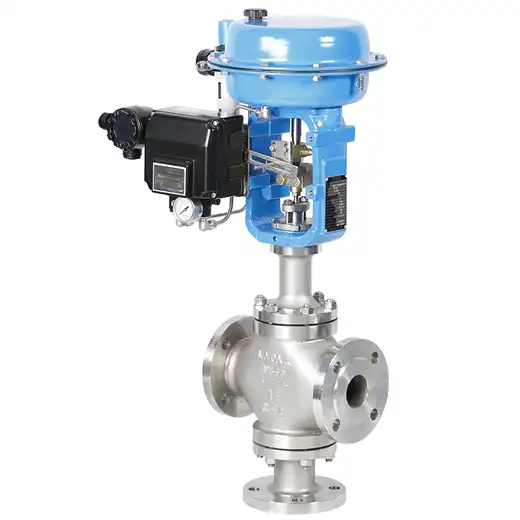
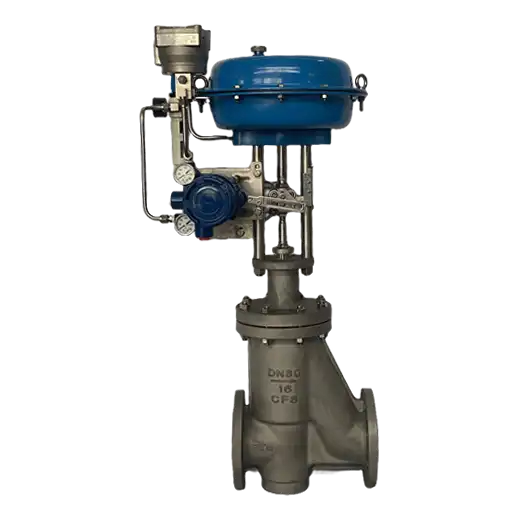
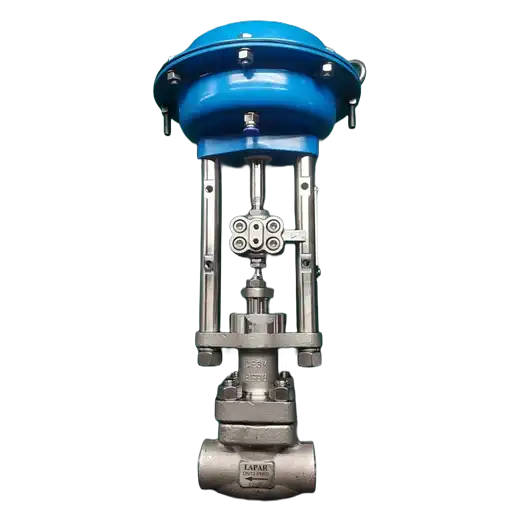
Single seat control valve is a top guiding straight through valve, the body channel is S-streamlined, which has a simple structure, well sealing, high flow rate and stable application performance. The reasonable top spiral system can avoid vibration during a small opening percentage, so as to extend valve working life.
Single seat control valve has good flow characteristic curve, suitable in the application with high precision, high flow rate and low pressure drop.
Through our precise structural design and processing technology, this type of valve can achieve zero leakage, no matter hard seal or soft seal.
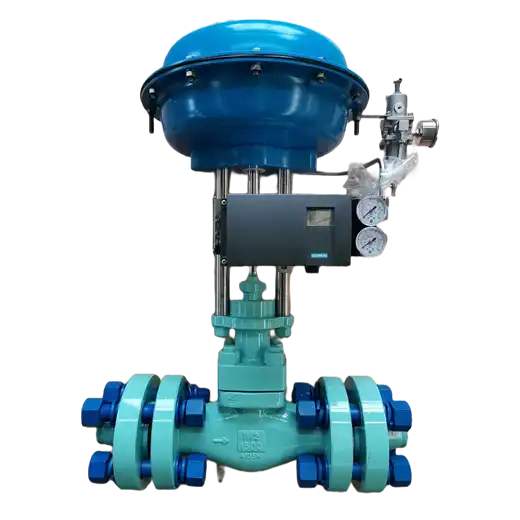
Single seat control valve is usually equipped with pneumatic diaphragm actuator, electrical actuator, manual or other actuators. Assembly with positioner, solenoid valve and other control components, it is used as a control element to control process parameters such as pressure, temperature and liquid level in process automation.
Key Features
- Characterized Trim Geometries Engineered for Closed-Loop Stability: Plugs are precision-machined with mathematically defined contours (not simple V-port or flat-face profiles) to produce true linear, equal-percentage, or custom-modified inherent characteristics validated by flow testing per IEC 60534-2-1; ensures controller tuning remains valid across entire operating envelope and prevents limit cycling or sluggish response due to gain variation.
- High-Resolution Positioning System with Sub-1% Hysteresis: Integrates low-stiction stem guides, live-loaded packing, and matched pneumatic/electric positioners to achieve ≤0.75% hysteresis and ≤0.5% deadband per ISA-75.08.01, enabling fine correction of small process deviations without overshoot or oscillation in sensitive loops like reactor temperature or distillation column reflux ratio control.
- Dynamic Unbalanced Force Compensation Through Actuator-Trim Matching: Sizing methodology accounts for actual ΔP at every stroke position—not just max/min conditions—to select actuator thrust margins that maintain ±1% positioning accuracy despite process upsets; avoids common field failures caused by undersized actuators stalling mid-stroke or oversized units causing seat damage during modulation.
- Field-Tunable Flow Characteristic Without Trim Replacement: Offers interchangeable characterization cams (for pneumatic positioners) or digital curve-select modules (for smart positioners) to adapt valve gain to changing process dynamics (e.g., heat exchanger fouling, catalyst deactivation) during routine maintenance, extending effective service life and avoiding costly re-trimming or valve replacement.
Typical Applications
- Regulation of Diverse Process Parameters Across Unit Operations: Serves as the universal final control element for modulating all major process variables—including flow rate, pressure, temperature, level, composition, pH, conductivity, viscosity, and density—in reactors, columns, heat exchangers, separators, pumps, compressors, and storage systems; its adaptable trim and actuation platform allows seamless integration into any control loop regardless of measured parameter type, ensuring consistent regulatory performance plant-wide.
- Clean Utility and Chemical Dosing Systems: Controls deionized water, nitrogen purge, catalyst injection, and additive blending streams where bubble-tight shutoff prevents cross-contamination and precision modulation ensures recipe accuracy; soft-seat variants handle corrosive acids/bases without metallic galling.
- Steam and Condensate Temperature/Pressure Regulation: Manages saturated and superheated steam flows up to ASME Class 600 / PN100 in heat exchangers, tracing systems, and sterilization cycles using hardened metal seats resistant to thermal cycling and wire-drawing erosion during frequent on-off modulation.
- Liquid Level and Flow Control in Non-Cavitating Services: Regulates tank level, pump recirculation, and transfer line flows in water treatment, food & beverage, and pharmaceutical processes where ΔP remains below incipient cavitation thresholds and cleanliness mandates easy-cleanability and drainable body geometries.
- Gas Pressure Reduction and Fuel Metering Stations: Provides stable downstream pressure regulation for natural gas, hydrogen, and instrument air supplies with tight shutoff during shutdowns; characterized plugs compensate for compressible flow nonlinearity to maintain loop stability across varying demand profiles.
Selecting a single seat control valve for modulation duty requires rigorous analysis of process gain, disturbance spectra, actuator dynamics, and trim-process interaction—not merely matching line size and pressure class. Our application engineering team performs dynamic loop simulation and field-calibrated trim selection to ensure delivered performance meets control specifications across all credible operating points. We provide not a generic valve, but a validated modulation asset engineered for stability, longevity, and seamless integration into your process control strategy—backed by global technical support and decades of field-proven regulatory performance.
Specifications
Valve Size:
NPS1/2 - NPS4;
DN15 - DN100
Pressure Class:
ASME Class 150, Class 300, Class 600;
DIN PN10, PN16, PN25, PN40, PN64
Operating Temperature:
-196 to +650 °C / -320 to +1200 °F
Process Connection Type:
Flanged, Welding, NPT Threaded, Grayloc, Custom
Body Style:
Straight, Angle, 3-way, Y-Pattern, Fabricated, Steam Jacketed, Vacuum Jacketed
Valve Bonnet:
Standard, High Temperature, Cryogenic
Stem Seal:
Adjustable Packing, Bellows Seal
Seat Leakage:
Class IV, Class V, Class VI according ANSI/FCI 70-2, soft seating Class VI-Bubble tight (Zero Leakage)
Flow Characteristics:
Linear, Equal Percentage, Quick Open, Custom
Critical Service:
Dirty Service, Steam Condition, Erosive, Low Flow, Corrosive, General Service, Outgassing
Valve Actuator:
Electric, Hydraulic, Pneumatic, Electro-Hydraulic
Valve Accessories:
Pneumatic Positioner, Electro Pneumatic Positioner, Limit Switch, SOV, Air lock relay, Volume Booster, AFR, Position Transmitter
Certifications:
ANSI/ISA, ASME, NACE, PED, ATEX, SIL capable
Media:
Gases, Liquids, Water, Air
Industries:
Chemical/Petrochemical, Food & Beverage, Industrial Gases, Metals & Mining, Oil & Gas, Power, Pulp & Paper, Refining
Other Configurations:
Consult your local Lapar business partner or sales office to learn about additional specifications or options for this product.
Resources
Data Sheets:
Manuals: IOM
Product Photos: