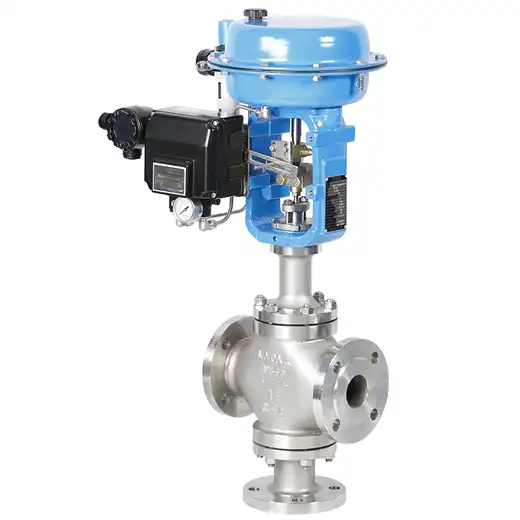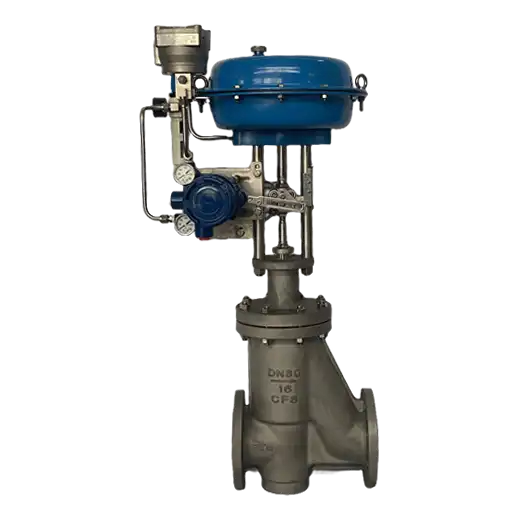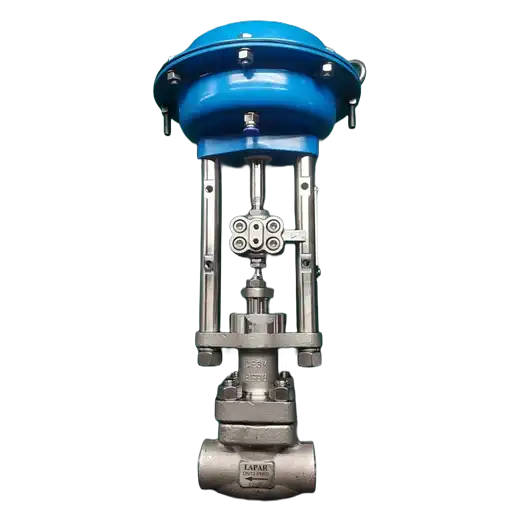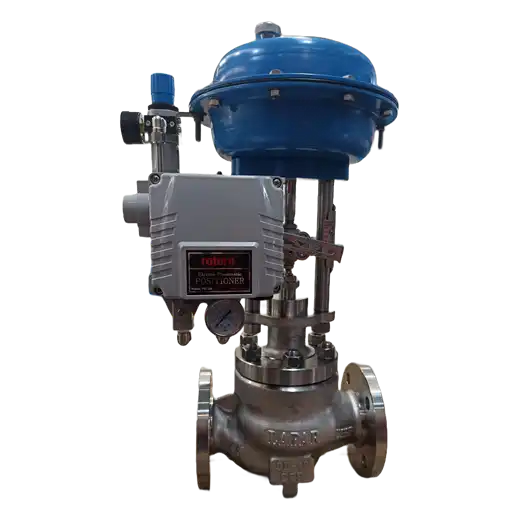
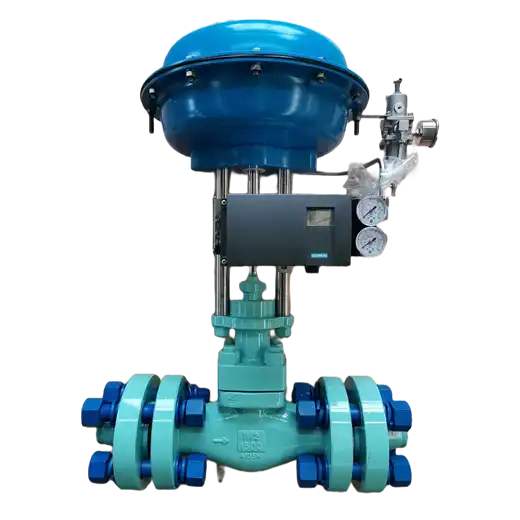
High pressure single seated control valve combines the tight shutoff of a single-seat design with the heavy-wall body, reinforced bonnet and hardened trim geometry required to survive high inlet pressure and high differential in continuous service.
Product Description
High pressure changes what fails first. At elevated inlet pressure, the body and bonnet carry substantially higher stress, the stem must transmit far greater thrust, the packing is worked harder against leakage, and any soft or marginally supported trim component becomes the weak link. A valve that is adequate at Class 300 can be structurally sound at Class 1500 and still fail in weeks because its guiding, trim material or packing arrangement was never intended for the duty.
A high pressure single seated valve addresses those failure modes directly. The body section is thickened and the pressure boundary is rated and marked per ASME B16.34. Where the pressure class and temperature make a bolted bonnet impractical, a pressure seal bonnet is used: internal pressure energizes the seal ring, so the joint tightens as pressure rises instead of being worked loose by it. Trim is hardened or hard-faced to resist the wire-drawing and erosion that high differential produces, plug guiding is reinforced to keep the plug centered under high thrust, and the packing arrangement is selected for the pressure and temperature rather than carried over from a general-service bill of materials.
The single-seat architecture is retained deliberately. A single seat gives tight, predictable shutoff — classified per ANSI/FCI 70-2 — which matters on feedwater, steam and gas service where leakage is lost energy, lost product or a safety issue. The trade-off is unbalanced thrust: pressure acts on the full plug area, so actuator sizing must account for it. Sizing follows the IEC 60534 series, and where the required thrust exceeds a practical actuator, a pressure balanced cage design is usually the better answer — that is a different product, and choosing between the two should be driven by the actual differential rather than by habit.
Key Features
- Pressure-rated pressure boundary: body, bonnet and bolting rated and marked per ASME B16.34, with heavy-wall sections for the specified class.
- Pressure seal bonnet option: internal pressure energizes the seal ring, so the body-to-bonnet joint becomes tighter as pressure increases instead of relaxing under cycling.
- Hardened and hard-faced trim: hardened stainless, Stellite or equivalent hard-facing resists wire-drawing and erosive wear at high differential.
- Reinforced plug guiding: top-and-bottom or cage guiding keeps the plug centered under high thrust loads, preventing the side loading that leads to stem damage and erratic travel.
- Packing system selected for the duty: live-loaded or high-density packing sets with anti-extrusion rings control stem leakage at elevated pressure and temperature.
- Tight, repeatable shutoff: single-seat geometry with metal or hard-faced seating surfaces, with leakage classified per ANSI/FCI 70-2.
Typical Applications
- Boiler feedwater control and startup regulation — main and startup feedwater duties where inlet pressure and differential are both high.
- High pressure steam service — main steam, auxiliary steam and turbine bypass auxiliary lines within the valve's pressure and temperature envelope.
- High pressure gas injection and letdown — nitrogen, hydrogen, synthesis gas and natural gas injection where the differential demands a robust trim.
- Amine, glycol and high pressure process letdown — corrosive service at elevated pressure, where trim material and shutoff both matter.
- Wellhead, gathering and utility high pressure duties — services where a general-purpose control valve body is not rated for the line class.
High pressure service rewards nothing that was selected approximately. Body class, bonnet type, trim material and actuator thrust all have to be resolved together against the real operating envelope, not against a catalog page. We size each unit against your inlet pressure, differential, temperature and fluid properties, confirm the thrust requirement against the actuator, and select the bonnet and packing arrangement for the actual duty cycle. The result is a valve that holds its class rating, holds its shutoff, and stays in service between turnarounds.
Technical Specifications
| Valve Size | NPS 1 – NPS 16 / DN 25 – DN 400 |
|---|---|
| Pressure Class | ASME Class 900 to 2500 (higher on request); DIN PN100, PN160, PN250 |
| Operating Temperature | -29 to +595 °C / -20 to +1100 °F |
| Process Connection | Flanged (RTJ), Butt Weld, Socket Weld, Grayloc Hub, Custom |
| Body Style | Straight (Globe), Angle, Y-Pattern |
| Bonnet | Bolted, Pressure Seal, High Temperature (Finned / Extension), Cryogenic |
| Stem Seal | Live-Loaded Packing with Anti-Extrusion Rings (bellows seal available) |
| Trim | Hardened stainless or hard-faced plug and seat; cage-guided on request |
| Seat Leakage | Class IV, Class V per ANSI/FCI 70-2 |
| Flow Characteristics | Linear, Equal Percentage, Quick Open, Custom |
| Critical Service | High Pressure, High Differential, Erosive, Steam, Boiler Feedwater, General Service |
| Actuator | Pneumatic Diaphragm, Piston, Electric, Hydraulic, Electro-Hydraulic |
| Accessories | Positioner, Position Transmitter, Limit Switch, Solenoid Valve, Air Lock Relay, Volume Booster, Air Filter Regulator |
| Certifications | ANSI/ISA, ASME, NACE, PED, ATEX, SIL capable |
| Media | Steam, Water, Gases, Liquids |
| Industries | Power, Oil & Gas, Refining, Chemical & Petrochemical, Metals & Mining |
Frequently Asked Questions
When should I choose a pressure seal bonnet instead of a bolted bonnet?
A pressure seal bonnet is normally specified once the pressure class and size make a bolted joint impractically large or prone to relaxation under cycling. Because internal pressure energizes the seal ring, the joint tightens as pressure rises. A bolted bonnet remains appropriate at lower classes and is simpler to service.
Why is a single-seat design used at high pressure if it produces unbalanced thrust?
Because it gives the tightest, most predictable shutoff. The unbalanced thrust is real and must be accounted for in actuator sizing, but that is an actuator problem with a known solution. Where the differential makes the required thrust impractical, a pressure balanced cage design is the better choice.
Can this valve handle both high pressure and high differential?
Yes up to the limit of the trim. High differential introduces cavitation and erosion risk that pressure rating alone does not address. Where the differential is severe enough to cause cavitation or flashing, a multi-stage anti-cavitation trim is required instead.