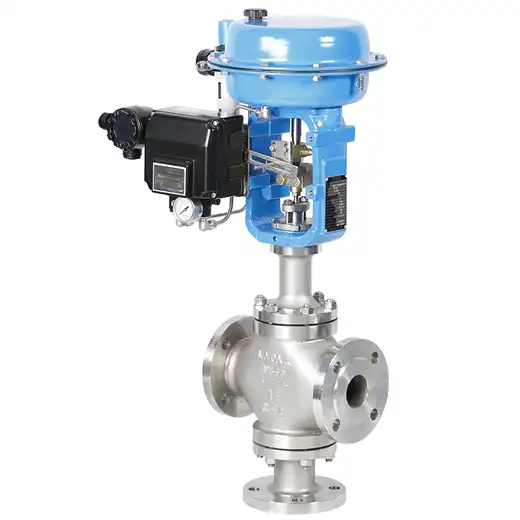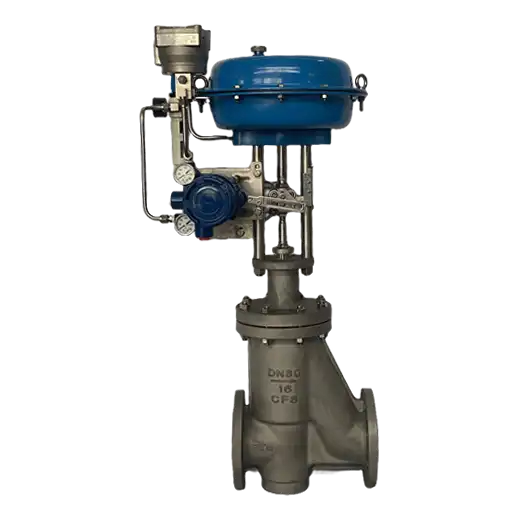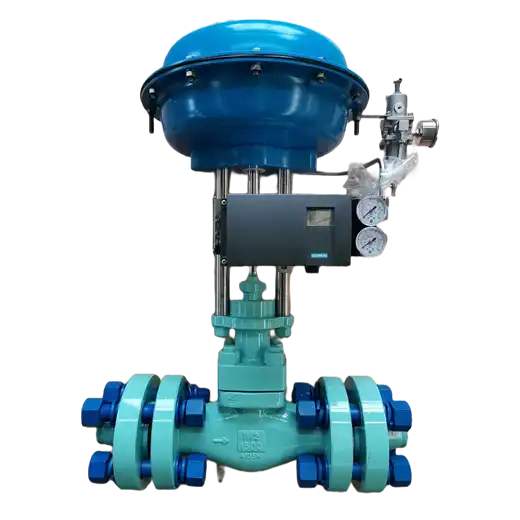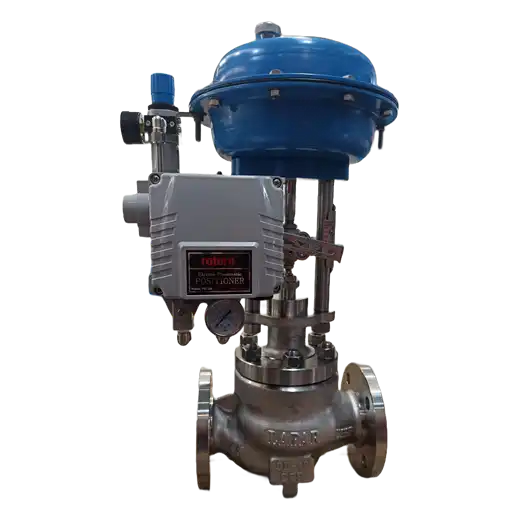
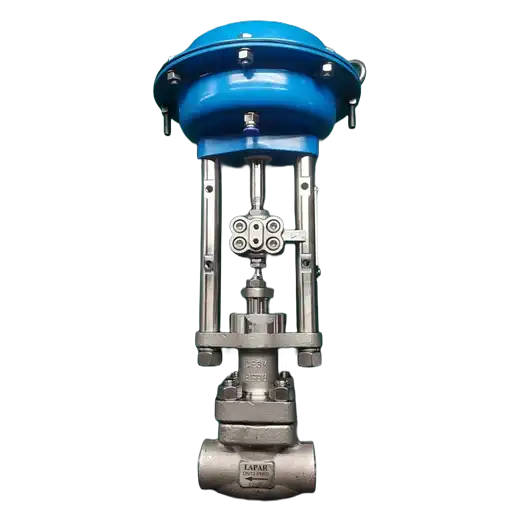
Single Seat Control Valve with Precision Low-Cv Trim for Dosing, Injection and Pilot-Scale Flow Control
Product Introduction
A micro-flow single seat control valve delivers stable, repeatable modulation at flow coefficients far below the range where a standard single-seat trim loses control authority — making it the correct choice for dosing, injection and pilot-scale service.
Product Description
Controlling a very small flow is not simply a matter of installing a smaller valve. When a conventional single-seat valve is sized for a low flow, the plug operates within a few percent of travel from the seat. In that region, a tiny stem movement produces a disproportionately large change in flow area, so the combined effect of machining tolerance, actuator deadband, positioner resolution and seat wear dominates the control loop. The practical symptoms are familiar: the valve hunts around setpoint, the loop has to be detuned until it barely responds, and repeatable control at low flow becomes impossible. Continuous operation near the seat also concentrates the full pressure drop across a very small gap, which erodes the seating surface prematurely.
A micro-flow valve is built around a different premise. Instead of throttling a standard trim at a nearly closed position, it uses a purpose-machined trim — reduced seat diameter, parabolic or needle-type plug, and slotted or micro-grooved cage geometry — that produces the required flow coefficient at a usable portion of travel. Keeping the plug away from the seat restores the relationship between stem position and flow, so the valve modulates predictably across its range instead of switching between "closed" and "too much." Trim kits are interchangeable, which lets one body cover several discrete Cv steps and lets a plant correct a sizing error or respond to a process change without replacing the valve or modifying piping.
Low-capacity service has its own discipline. Fine flow passages are less tolerant of particulates than a full-size trim, so upstream filtration is normally recommended on anything other than clean fluids. Materials are selected for chemical compatibility rather than mechanical strength alone, because additive and catalyst injection streams are frequently corrosive, reactive or toxic. On the automation side, pairing the valve with a high-resolution positioner reduces hysteresis and lets the loop take advantage of the rangeability the trim is capable of. Sizing follows the IEC 60534 series, and seat leakage is classified per ANSI/FCI 70-2.
Key Features
- Precision low-Cv trim: reduced seat diameters, parabolic and needle plugs, and slotted cage geometry produce the required capacity at a usable opening instead of throttling near the seat.
- Interchangeable trim kits: one body accepts multiple discrete Cv steps, so capacity can be corrected or re-ranged in the field without changing the valve or the piping.
- High rangeability: the characterized trim maintains controllable modulation across a wide turndown, supporting both startup and steady-state dosing rates.
- Stable, repeatable modulation: matched with a high-resolution positioner, the assembly minimizes deadband and hysteresis so the control loop can be tuned tightly rather than detuned to survive instability.
- Tight shutoff options: metal and soft seat configurations are available, with leakage classified per ANSI/FCI 70-2.
- Compact, skid-friendly construction: small face-to-face dimensions and threaded, flanged or compression end connections suit analyzer shelters, pilot skids and crowded injection points.
Typical Applications
- Chemical additive and catalyst injection — corrosion inhibitor, methanol, amine, anti-foam and catalyst dosing where the injected rate is small relative to the main stream and directly affects product quality.
- Pilot plants, laboratory skids and R&D rigs — flow ranges far below full production scale, where the same valve must cover several experimental conditions.
- Analyzer sample and bypass flow control — constant, repeatable sample flow to process analyzers, where unstable flow invalidates the measurement.
- Seal gas and purge gas control — small continuous flows to compressor seals, instrument purges and blanket gas take-offs.
- Fine dosing in pharmaceutical, fine chemical and food processing — pH adjustment, neutralization, flavor and fragrance addition, and other services where the dose is the product specification.
Micro-flow applications punish approximations. A valve selected by body size rather than by calculated flow coefficient will either be unable to reach the required rate or will spend its life cycling against the seat — and in dosing service, dosing error is product error. We size every unit against your actual flow, differential and fluid properties, confirm the trim step against the turndown you need, and match materials to the injected chemical. The result is a dosing and injection point that holds its rate, responds to the loop, and stays out of the maintenance queue.
Technical Specifications
| Valve Size | NPS 1/2 – NPS 2 / DN 15 – DN 50 |
|---|---|
| Pressure Class | ASME Class 150 to 900; DIN PN16, PN40, PN63, PN100 |
| Operating Temperature | -29 to +400 °C / -20 to +750 °F |
| Process Connection | Flanged, Butt Weld, NPT Threaded, Compression Fitting, Custom |
| Body Style | Straight (Globe), Angle, Compact Bar Stock |
| Bonnet | Standard, Extended, High Temperature, Cryogenic |
| Stem Seal | Adjustable Packing (bellows seal available) |
| Trim Type | Micro-machined parabolic plug, needle plug and slotted cage; interchangeable trim kits |
| Flow Coefficient (Cv) | 0.0000002~5 |
| Rangeability | 20:1 for Rated Cv 0.00025 and above, 10:1 for Rated Cv below 0.00025 |
| Seat Leakage | Class IV, Class V, Class VI per ANSI/FCI 70-2 |
| Flow Characteristics | Linear, Equal Percentage, Quick Open, Custom |
| Critical Service | Low Flow, Precision Dosing, Corrosive, Toxic / Volatile Media, Clean Service, Sampling |
| Actuator | Pneumatic Diaphragm, Piston, Electric; high-resolution positioner recommended |
| Accessories | High-Resolution Positioner, I/P Converter, Position Transmitter, Limit Switch, Solenoid Valve, Air Filter Regulator |
| Certifications | ANSI/ISA, ASME, NACE, PED, ATEX, SIL capable |
| Media | Liquids, Gases, Steam, Chemical Additives |
| Industries | Chemical & Petrochemical, Pharmaceutical, Fine Chemicals, Oil & Gas, Power, Food & Beverage, Pulp & Paper |
Frequently Asked Questions
What makes a micro-flow control valve different from a standard single-seat valve?
The trim, not the body. A standard single-seat valve sized for a low flow throttles within a few percent of travel from the seat, where stem position and flow lose their predictable relationship. A micro-flow valve uses a reduced seat diameter and purpose-machined plug or cage geometry to produce the required capacity at a usable opening, so the valve modulates rather than switches.
Why not just install an undersized standard control valve?
Because the valve will spend its service life operating against the seat. That produces hunting, forces the loop to be detuned, and concentrates the full pressure drop across a small gap, which erodes the seating surfaces. It also leaves no margin: if the required rate rises even slightly, the valve is already at its limit.
How low can the flow coefficient go?
Micro-flow trims are built for the bottom of the Cv scale, well below the point where a conventional trim remains controllable. The exact range available on this model is listed in the specification table, and selection should always be made against your calculated required Cv and differential rather than by choosing a body size.
Does micro-flow trim clog easily?
Fine passages are less tolerant of particulates than a full-size trim. On anything other than clean, filtered fluids, an upstream strainer or filter sized for the trim's minimum passage is standard practice. For slurry or particle-laden service, a larger trim with a different staging approach is usually the better answer.
Can one valve body cover more than one flow range?
Yes. Interchangeable trim kits let a single body accept several discrete Cv steps. That is particularly useful on pilot plants and R&D skids, where the required rate changes between campaigns, and it allows a sizing error to be corrected without replacing the valve.
What seat leakage class can be achieved?
Metal and soft seat configurations are both available, with leakage classified per ANSI/FCI 70-2. Where dosing must stop completely between batches, or where the injected fluid is toxic or volatile, a soft seat configuration is normally specified.