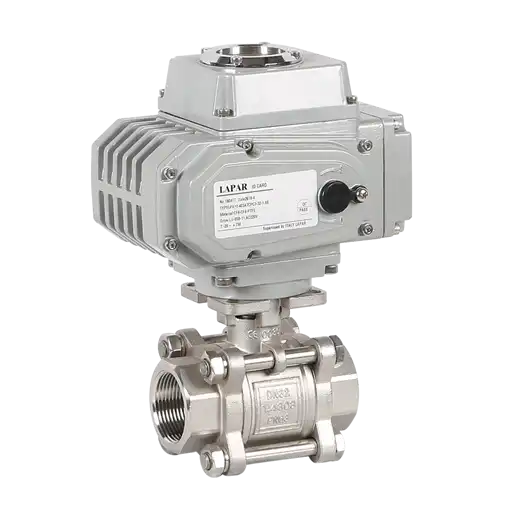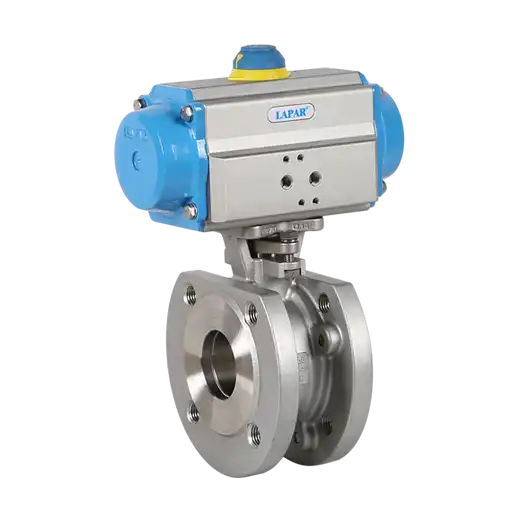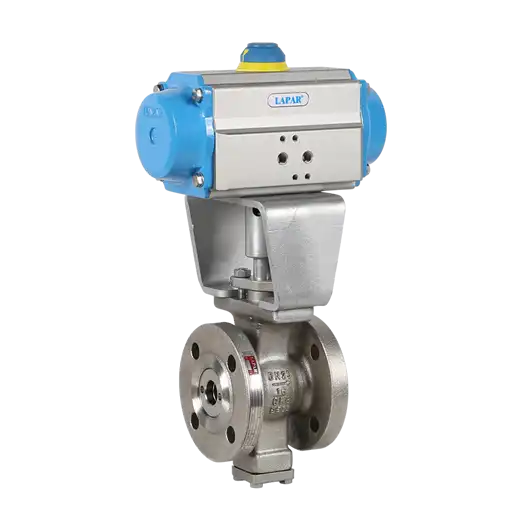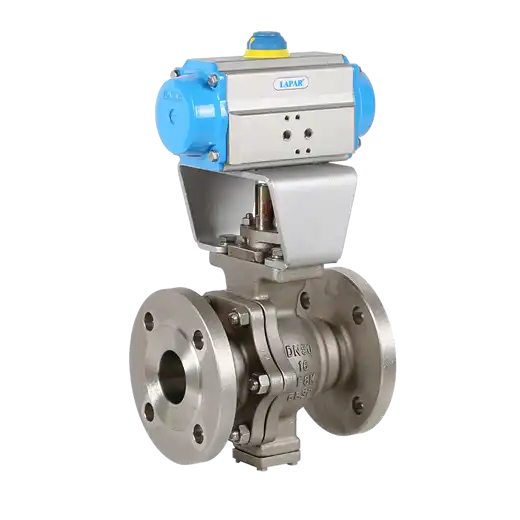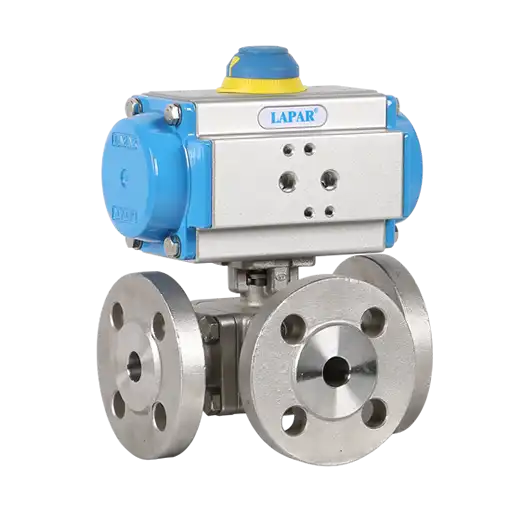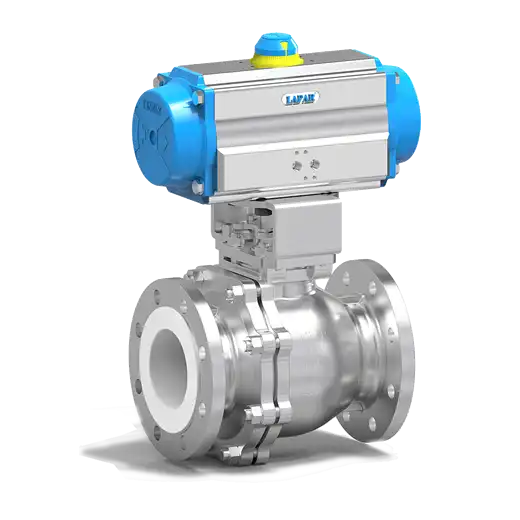
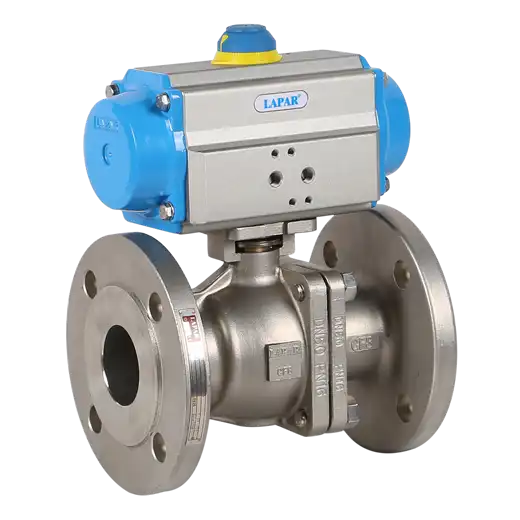
LPA11 Flanged Floating Soft-Seated Ball Valve with full bore or reduced bore featuring pressure-assisted soft-seat sealing, blowout-proof stem, anti-static device, and low-torque quarter-turn operation, delivering bubble-tight shutoff, minimal pressure drop, and extended cycle life across a wide range of pressures, temperatures, and media conditions.
Product Description
This flanged floating soft-seated ball valve provides reliable, leak-free isolation for liquids, gases, and light slurries in process and utility piping. The floating ball shifts axially under line pressure, pressing against the downstream resilient seat ring to form a self-energizing seal that tightens with increasing differential pressure, ensuring bubble-tight shutoff (API 598 Rate A) from vacuum to full rated pressure.
Soft seats are available in PTFE, reinforced PTFE, PEEK, Nylon, POM, and UHMW-PE, covering temperatures from −46 °C to +260 °C. In a fire event, the consumed soft seat is backed by a secondary metal-to-metal sealing interface with a flexible graphite gasket, limiting post-fire leakage per API 607 / ISO 10497 acceptance criteria.
Body construction is two-piece or three-piece bolted, in carbon steel (WCB), stainless steel (CF8M), duplex, or alloy steel, with flanged ends to ASME B16.5 (Class 150–600), EN 1092-1 (PN 16–100), or JIS B2220. Sizes range from DN 15 to DN 300, full-port as standard. Face-to-face dimensions per ASME B16.10 / EN 558.
The stem is blowout-proof, sealed with live-loaded PTFE V-ring packing and an O-ring secondary seal. An anti-static device ensures ball-to-body electrical continuity. An ISO 5211 top pad accepts direct-coupled actuators or manual operators. Every valve is 100 % tested: shell test at 1.5 × PN, closure test at 1.1 × PN, and pneumatic seat test at 0.6 MPa.
Key Features
- Pressure-assisted soft-seat sealing – Floating ball self-energizes against the downstream seat under line pressure, achieving zero-visible-leakage shutoff (API 598 / EN 12266-1 Rate A) without excessive actuator thrust.
- Fire-safe design – Secondary metal-to-metal backup seal with graphite gasket provides emergency isolation after soft-seat consumption; type-tested to API 607 / ISO 10497 at 760–927 °C for 30 minutes.
- Full-port flow capacity– Bore equals pipe ID, minimizing pressure drop and permitting pig passage for pipeline cleaning.
- Low operating torque – Lapped ball surface, low-friction seat materials, and polished stem reduce torque by up to 40 % versus trunnion designs, enabling smaller actuators.
- Blowout-proof stem – Internally retained by machined shoulder and gland plate per API 6D, preventing ejection under full line pressure.
- Anti-static device – Spring-loaded plungers maintain ball-stem-body continuity (< 10 Ω), preventing spark ignition in flammable media.
- Fugitive-emission sealing – Live-loaded PTFE packing with O-ring secondary seal meets ISO 15848-1 Class BH / EPA Method 21 (≤ 100 ppmv).
- Wide seat material range – PTFE, RPTFE, PEEK, Nylon, POM, UHMW-PE cover cryogenic, chemical, high-temperature, and abrasive services.
- Two-piece / three-piece body – Three-piece design allows in-line seat and ball replacement without breaking pipe connections.
- ISO 5211 actuator mounting – Standardized top pad accepts pneumatic, electric, or manual quarter-turn operators without adapters.
- Position locking – Padlock provision for LOTO safety isolation; visual open/closed indicator.
- Sour-service compliance – NACE MR0175 / ISO 15156 materials and hardness limits for H₂S service.
- 100 % factory tested – Hydrostatic shell, high-pressure closure, and low-pressure pneumatic seat tests per API 598; EN 10204 3.1 material certificates.
Typical Applications
- Oil & gas wellhead, manifold, pipeline sectioning, and storage-tank isolation
- Refinery and petrochemical transfer, reactor, and utility headers
- Chemical, acid, alkali, and solvent process lines
- Power plant feedwater, steam, and cooling-water circuits
- LNG and cryogenic isolation with fire-safe requirement
- Water treatment, desalination, and mining slurry service
- General industrial compressed-air, hydraulic, and thermal-oil systems
Specifications
Valve Size:
NPS1/2 - NPS12;
DN15 - DN300
Pressure Class:
ASME Class 150, Class 300, Class 600;
DIN PN10, PN16, PN25, PN40, PN63, PN100
Operating Temperature:
-46 to +260 °C / -50 to +500 °F
Process Connection Type:
Flanged
Valve Bonnet:
Standard
Stem Seal:
Adjustable Packing
Seat Leakage:
Class VI (FCI-70.2) Standard Leakage Rates, soft seating Class VI-Bubble tight (Zero Leakage)
Flow Characteristics:
Quick Open
Critical Service:
Corrosive, General Service, Chemical, Pharmaceutical, Steam, Chlorine, Oxygen, Vacuum, Low Temperature
Valve Actuator:
Electric, Hydraulic, Pneumatic, Lever, Gear, Electro-Hydraulic
Valve Accessories:
Pneumatic Positioner, Electro Pneumatic Positioner, Limit Switch, SOV, Air lock relay, Volume Booster, AFR, Position Transmitter
Certifications:
PED, ATEX, SIL capable, Fugitive Emission
Media:
Specialty Gases, Liquids, Air, Inert Gas, Water
Other Configurations:
Contact your local Lapar business partner or sales office to learn about additional specifications or options for this product.
Resources
Data Sheets: LPA11-Flanged-Ball-Valve
Manuals: IOM
Product Photos: