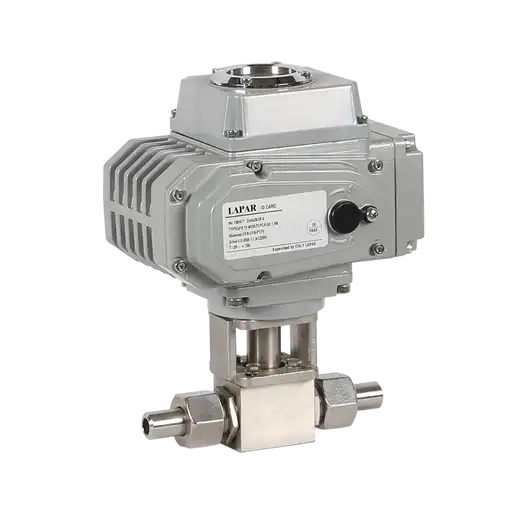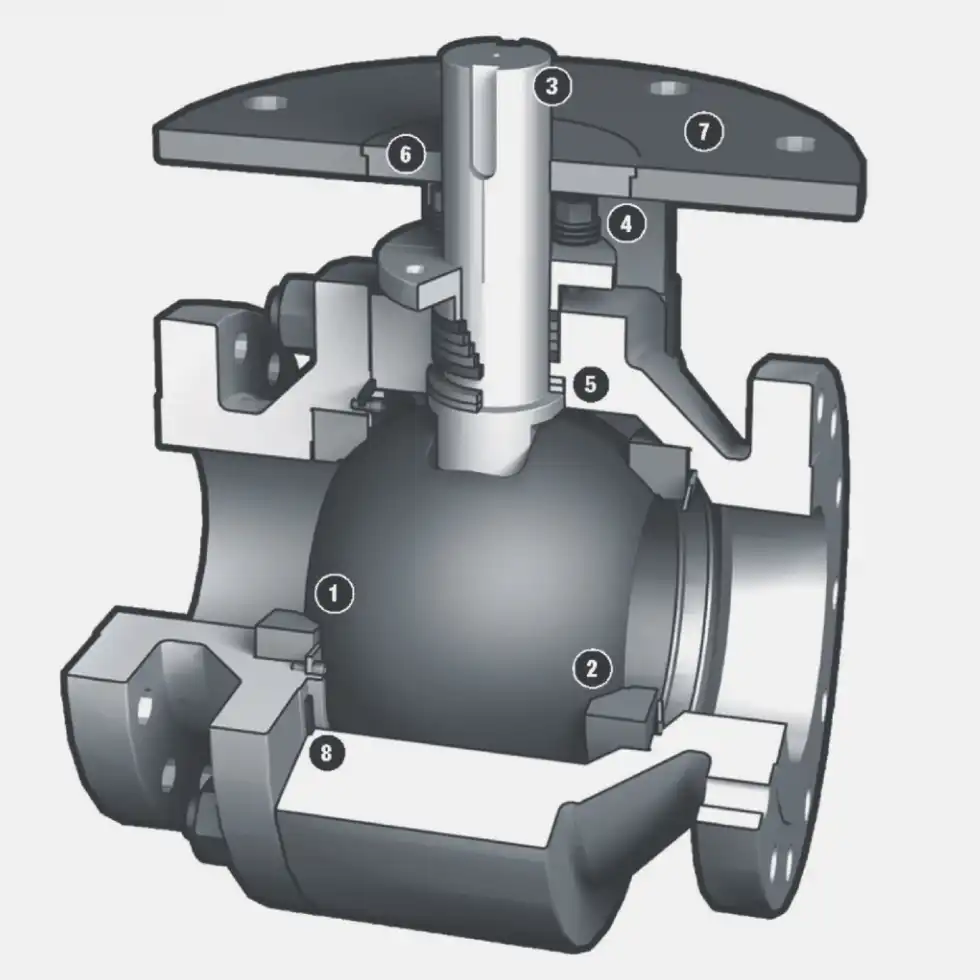
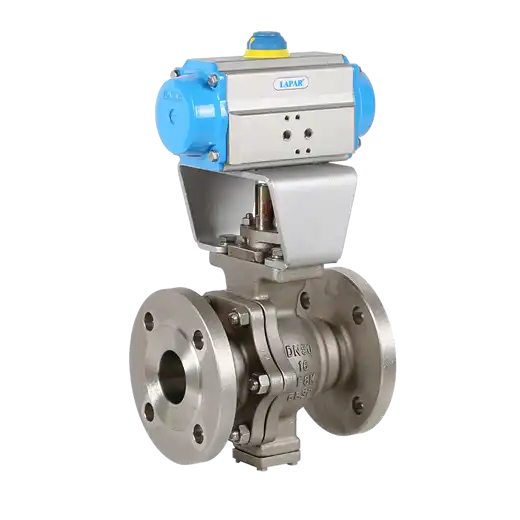
LPA18 Metal-Seated Ball Valve, a high-performance isolation valve that abandons elastomer seats entirely in favor of precision-engineered metal-to-metal sealing, delivering zero-leakage shutoff in extreme temperatures, high pressures, and the most abrasive, dirty-service environments where soft-seated valves fail.
Product Description
The metal-seated ball valve replaces conventional PTFE or PEEK seats with hardened metallic sealing surfaces, typically achieved through Stellite overlay, tungsten carbide spray, or nickel-based alloy coatings on both the ball and seat rings. The mating surfaces are lapped to optical-grade flatness, achieving ANSI B16.104 Class VI (zero visible leakage) or better.
Spring-loaded or plate-spring seat structures maintain constant sealing force regardless of pressure or thermal cycling, while the hardened surfaces resist scoring from entrained solids, coke, and abrasive powders. The valve operates reliably from cryogenic −196 °C to +600 °C and up to Class 2500 (PN 420), with bidirectional sealing capability.
Body materials include WCB, CF8M, duplex, Hastelloy, and titanium. Sizes DN 15–DN 600, with floating and trunnion-mounted ball options.
Key Features
- Metal-to-metal zero-leakage seal – Hardened ball and seat surfaces lapped to mirror finish; ANSI Class VI tightness without elastomer dependency.
- Extreme temperature survival – Operates continuously from −196 °C to +600 °C; no seat degradation, swelling, or cold-flow creep.
- Abrasion & erosion resistance – Stellite / WC / Ni-alloy coatings (HRC 60–78) withstand fly ash, catalyst fines, coke, and slurry impingement.
- Spring-loaded seat structure – Plate-spring or coil-spring backing maintains sealing force across full pressure and temperature range; compensates for thermal expansion.
- Fire-safe by design – All-metal sealing system is inherently fire-safe; no soft seat to combust, compliant with API 607 / ISO 10497.
- Bidirectional sealing – Symmetric seat geometry provides equal shutoff in both flow directions.
- Blowout-proof stem & anti-static – Standard safety features per API 6D.
- ISO 5211 actuator-ready – Direct-coupled quarter-turn automation without adapters.
Typical Applications
- Oil & gas refining – FCCU slurry, coker feed, hydrocracker effluent, and catalyst transfer lines with coke and fines
- Power generation – High-temperature steam isolation, turbine bypass, soot-blower headers, and fly-ash conveying
- Petrochemical – Polyethylene / polypropylene powder service, urea, and high-temperature hydrogen
- Mining & metallurgy – Tailings, slag granulation water, and abrasive ore slurry pipelines
- Chemical processing – High-temperature acids, molten salts, and corrosive oxidizers above 300 °C
- Pulp & paper – Black liquor, lime mud, and chip digester discharge with entrained solids
- Cryogenic LNG / liquid nitrogen – Extended-stem metal-seated variants for −196 °C isolation
Specifications
Valve Size:
NPS1/2 - NPS24;
DN15 - DN600
Pressure Class:
ASME Class 150, Class 300, Class 600, Class 900, Class 1500, Class 2500;
DIN PN10, PN16, PN25, PN40, PN63, PN100, PN160, PN260, PN420
Operating Temperature:
-196 to +600 °C / -320 to +1100 °F
Process Connection Type:
Flanged, Welded
Valve Bonnet:
Standard, Heating Extension, Cooling Extension
Stem Seal:
Adjustable Packing
Seat Leakage:
Class V and VI (FCI-70.2) Standard Leakage Rates, soft seating Class VI-Bubble tight (Zero Leakage)
Flow Characteristics:
Equal Percentage
Critical Service:
Noise Abatement, Dirty Service, Steam Condition, Erosive, Corrosive, General Service
Valve Actuator:
Electric, Hydraulic, Pneumatic, Lever, Gear, Electro-Hydraulic
Valve Accessories:
Pneumatic Positioner, Electro Pneumatic Positioner, Limit Switch, SOV, Air lock relay, Volume Booster, AFR, Position Transmitter
Certifications:
PED, NACE, ATEX, Fire Safe, SIL capable, Fugitive Emission
Media:
Liquids, Gas, Air, Water, Steam
Other Configurations:
Contact your local Lapar business partner or sales office to learn about additional specifications or options for this product.
Resources
Data Sheets: LPA18 Metal Seat Ball Valve
Manuals: IOM
Product Photos: