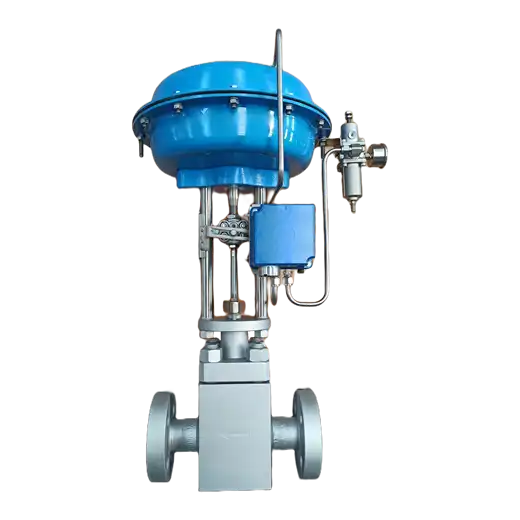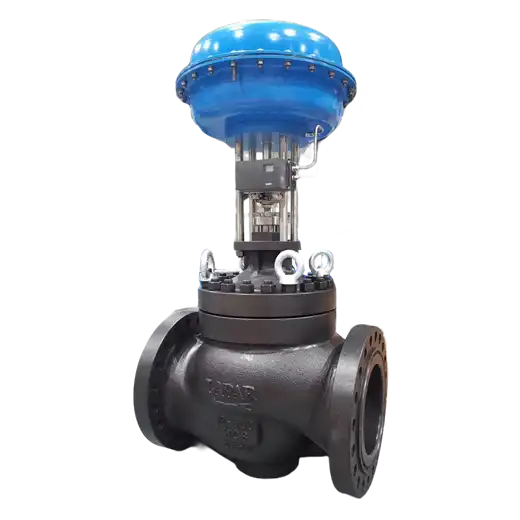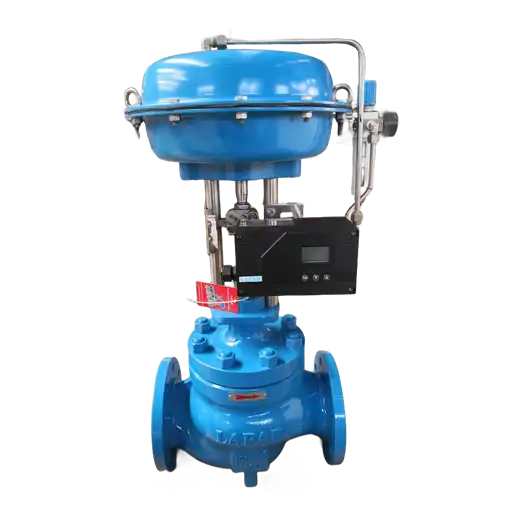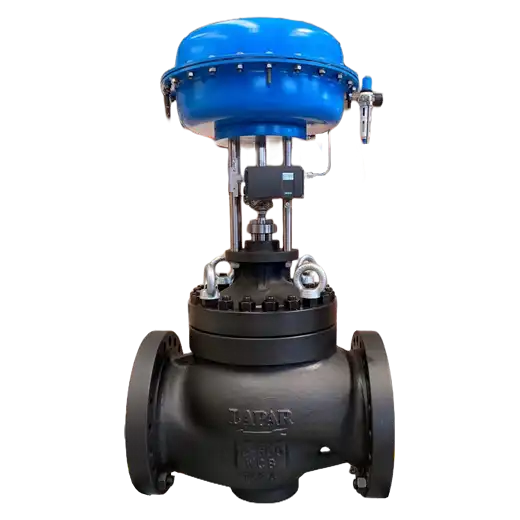
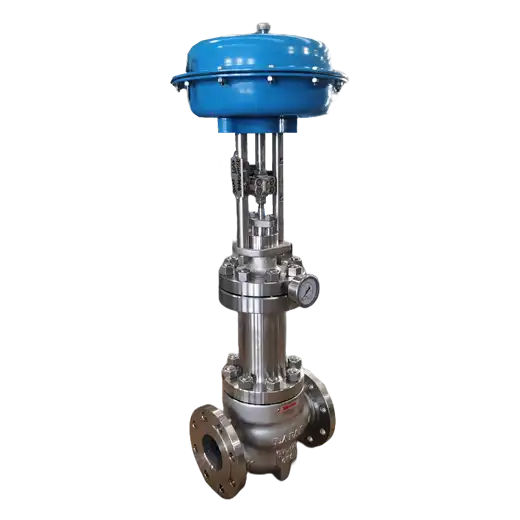
Low leakage cage type control valve is a cage-guided control valve whose seat and plug geometry, seating material and guiding precision are selected specifically to minimize seat leakage when the valve is closed, while retaining full modulating capability when it is open.
Product Description
Most control valves are asked to do two things that pull in opposite directions: modulate accurately through most of their travel, and seal tightly at the end of it. Those requirements are not naturally compatible. A throttling trim is designed around flow area and characteristic; a shutoff seat is designed around contact stress and surface finish. When a standard control valve is expected to do both, shutoff usually loses — and the consequence shows up as a valve that is nominally closed but still passing.
Whether that matters depends entirely on the fluid. On cooling water it is invisible. On a toxic monomer, a volatile organic under an emissions permit, a high-value catalyst stream, or a line that will be opened for maintenance while the upstream remains pressurized, seat leakage is a safety exposure, a compliance exposure or a direct product loss. In those services the leakage class is not a footnote on the datasheet — it is a specification that drives the purchase.
This valve is built around that requirement. The cage-guided architecture provides rigid plug alignment, which matters because leakage is often a guiding problem before it is a seat problem: a plug that is not perfectly centered cannot seat uniformly regardless of seat material. Seat construction is then selected against the required class per ANSI/FCI 70-2 — soft seating for the tightest classes, lapped metal seating where temperature or fluid compatibility rules out a soft seat. The trade-off is explicit and should be stated at specification: soft seats deliver the tightest shutoff but have temperature and abrasion limits, and lapped metal seats tolerate higher temperature and dirty service but do not reach the same leakage class. Guiding, seat material and actuator thrust are resolved together, because tight shutoff also requires enough seating force to close the seat against the differential.
Key Features
- Engineered for a defined leakage class: seat and plug construction selected to meet Class V or Class VI per ANSI/FCI 70-2, rather than inheriting a default class from a general-purpose trim.
- Rigid cage guiding: the cage keeps the plug concentric through full travel, so the seating surfaces meet uniformly — a prerequisite for repeatable tight shutoff.
- Soft or lapped metal seating: soft seats reach the tightest classes; lapped metal seats serve higher temperature and dirtier fluids within their own class limit.
- Full modulating capability retained: the valve is a control valve first — characterized trim delivers linear or equal-percentage control through the operating range.
- Seating force verified for the differential: shutoff class is confirmed against the actual closing differential, because a seat rated at low differential will not hold the same class at high differential.
- Defined trade-offs stated up front: temperature, abrasion and leakage class are resolved together at specification rather than discovered in service.
Typical Applications
- Toxic and carcinogenic fluid control — where closed-valve leakage is a personnel exposure risk during operation or maintenance.
- Volatile organic and emissions-permitted service — where seat leakage counts against a site emissions inventory.
- High-value product and catalyst streams — where leakage is direct, measurable product loss.
- Block-and-bypass and isolation-critical duties — where a control valve is also expected to hold a line for maintenance isolation.
- Batch processes requiring positive end-of-step shutoff — where carryover between batches contaminates the next batch.
Leakage class is one of the few specifications that can be stated precisely and verified on a test bench, which is exactly why it should never be left to a default. Tell us the fluid, the closing differential, the temperature and the class you need to meet, and the seat construction is selected against those four inputs rather than against a catalog. Where temperature or abrasion rules out the tightest class, we will say so at specification rather than after commissioning. The result is a shutoff performance you can put in a permit application.
Technical Specifications
| Valve Size | NPS 1 – NPS 16 / DN 25 – DN 400 |
|---|---|
| Pressure Class | ASME Class 150 to 600; DIN PN16, PN25, PN40, PN63, PN100 |
| Operating Temperature | -29 to +425 °C / -20 to +800 °F (seat material dependent) |
| Process Connection | Flanged, Butt Weld, Socket Weld, Custom |
| Body Style | Straight (Globe), Angle |
| Bonnet | Standard, High Temperature (Finned / Extension), Cryogenic |
| Stem Seal | Adjustable Packing (bellows seal available) |
| Trim | Cage-guided plug; characterized cage for linear or equal-percentage control |
| Seat Construction | Soft seat or lapped metal seat, selected by leakage class |
| Seat Leakage | Class V, Class VI per ANSI/FCI 70-2 (Class IV with metal seat on request) |
| Flow Characteristics | Linear, Equal Percentage, Quick Open, Custom |
| Critical Service | Low Leakage, Toxic Media, Volatile Organic, High Value Product, Block and Bypass |
| Actuator | Pneumatic Diaphragm, Piston, Electric, Hydraulic |
| Accessories | Positioner, Position Transmitter, Limit Switch, Solenoid Valve, Air Lock Relay, Volume Booster, Air Filter Regulator |
| Certifications | ANSI/ISA, ASME, NACE, PED, ATEX, SIL capable |
| Media | Liquids, Gases, Steam, Volatile and Toxic Fluids |
| Industries | Chemical & Petrochemical, Pharmaceutical, Oil & Gas, Refining, Fine Chemicals, Industrial Gases |
Frequently Asked Questions
What leakage class can this valve achieve?
Class V and Class VI per ANSI/FCI 70-2 are the design targets, with soft seating used for the tighter class and lapped metal seating where temperature or fluid compatibility requires it. The achievable class must be confirmed against the closing differential, because a seat tested at low differential will not necessarily hold the same class at high differential.
What is the difference between a low leakage valve and a pressure balanced cage valve?
They optimize for different things. A pressure balanced design reduces the unbalanced thrust on the plug so a smaller actuator can handle a high differential, which typically costs some seat leakage because of the balance seal. A low leakage design prioritizes shutoff class. Where both high differential and tight shutoff are required, the two requirements must be balanced explicitly during selection.
Why does guiding matter for seat leakage?
Because a plug that is not perfectly centered cannot seat uniformly. Many leakage complaints are guiding problems rather than seat problems. Cage guiding keeps the plug concentric through the full travel so the seating surfaces meet evenly every time.
Can a soft seat be used at high temperature?
Soft seats have defined temperature limits, and exceeding them is the most common cause of premature seat failure. Above the soft seat limit, a lapped metal seat is specified — it will not reach Class VI, but it holds a defined class at temperatures that would destroy a soft seat.
Is tight shutoff compatible with throttling control?
Yes, within the limits of the seat material. The valve remains a characterized control valve through its operating range. The practical caution is that throttling near the seat with a soft seat and high differential accelerates seat wear, so service life and leakage class should be considered together.