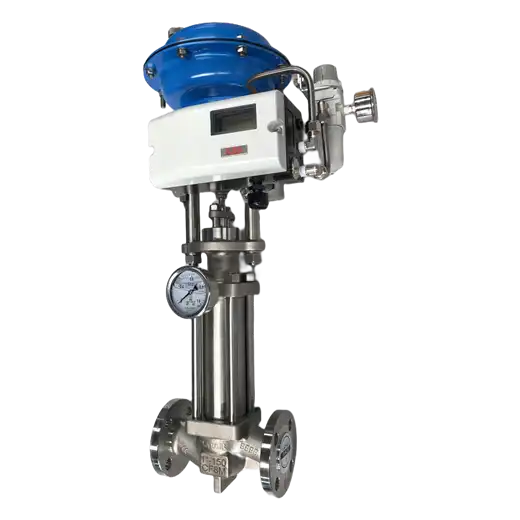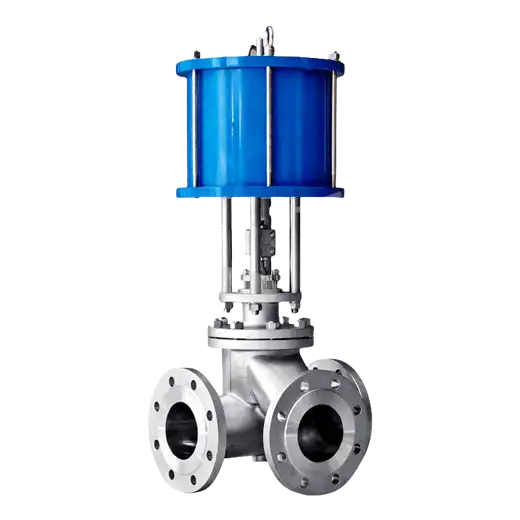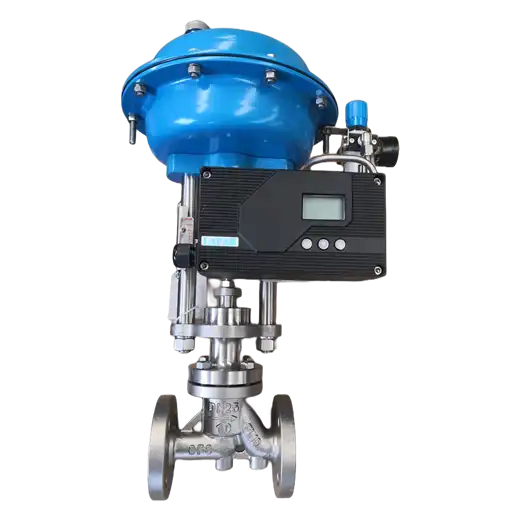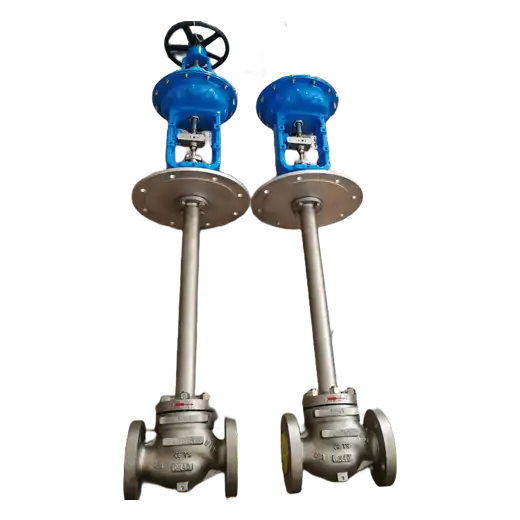
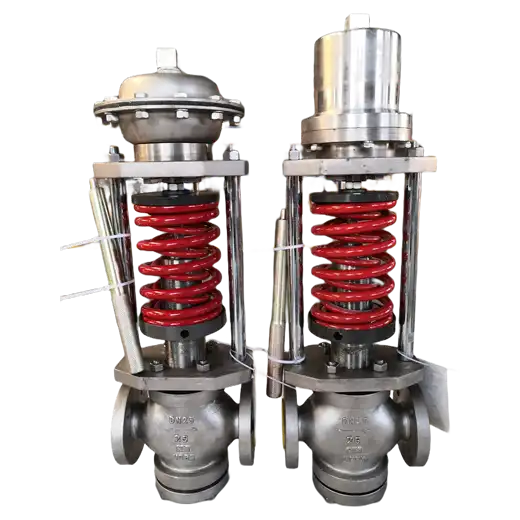
Self-Operated Flow Regulator That Holds a Constant Flow Rate Without Instrument Air or Power.
Product Introduction
A self regulating flow control valve holds a constant volumetric flow rate as supply and downstream pressure vary, using the pressure differential across an internal restriction to position the plug — with no instrument air, flowmeter or controller.
Product Description
Holding a constant flow normally means measuring it, which means a flowmeter, a transmitter, a controller and an actuated valve: four devices and a control loop to maintain one number. For a large class of duties that is more infrastructure than the requirement justifies. Cooling water to a bearing or a seal, continuous purge and sample flows, irrigation and wash water, dosing water and recirculation lines frequently need only one thing — the same flow, all the time, independent of what the header pressure does.
This valve provides it mechanically. An internal restriction in series with the throttling plug generates a pressure differential proportional to flow. The actuating element senses that differential and positions the plug to hold it constant, which holds the flow constant. When upstream pressure rises, the plug moves to absorb the additional differential; when downstream pressure rises and the differential falls, the plug opens to restore it. The correction is continuous and automatic, and it consumes no external energy.
Two points determine whether the valve performs as intended. First, the regulator must be sized for the flow and differential it will actually see — a regulator selected without adequate differential across it cannot regulate, because there is not enough pressure drop available for the plug to modulate. Second, the valve controls flow, not level, pressure or temperature: it is the right answer when constant flow is the requirement, and the wrong answer when the process variable being controlled is something else. Accuracy is lower than a metered control loop, and setpoint is adjusted mechanically rather than remotely. Where flow must be recorded, totalized or changed from the control room, an instrumented loop is the correct answer.
Key Features
- Constant flow without a flowmeter: the differential across an internal restriction is sensed directly, so flow is held without measurement instrumentation.
- Compensates for pressure variation: the plug repositions continuously as upstream or downstream pressure changes, absorbing the change rather than passing it to the flow rate.
- No external power or control loop: no instrument air, wiring, transmitter, controller or positioner required.
- Mechanical setpoint adjustment: the flow setting is adjusted at the regulator without configuration tools.
- Simplifies skid and utility design: removes the flowmeter, transmitter and loop from duties that only need a steady rate.
- Fails to a defined position: the spring arrangement determines fail action, specified to suit the process.
Typical Applications
- Cooling water to bearings, seals and small exchangers — constant flow independent of header pressure swings.
- Seal water and flush water supply — maintaining a steady flush rate to pump seals.
- Continuous purge and analyzer sample lines — constant sample flow to keep measurements valid.
- Wash water, irrigation and utility water services — steady flow where metering is not justified.
- Recirculation and continuous bypass lines — holding a fixed recirculation rate without a control loop.
The failure mode of a self-operated flow regulator is almost always a sizing issue rather than a product issue: not enough differential available across the valve for the plug to modulate, so the regulator behaves like a fixed restriction. That is why the available differential matters as much as the required flow. We confirm the minimum and maximum differential your installation will see, check that there is enough drop for the regulator to work across the whole range, and set the flow range accordingly. Where the available drop is insufficient, we will say so rather than ship a regulator that cannot regulate.
Technical Specifications
| Valve Size | NPS 1/2 – NPS 12 / DN 15 – DN 300 |
|---|---|
| Pressure Class | ASME Class 150 to 300; DIN PN16, PN25, PN40 |
| Operating Temperature | -29 to +200 °C / -20 to +390 °F (element material dependent) |
| Control Function | Constant flow regulation, independent of supply and downstream pressure |
| Flow Range | Kv 3.2~710, Cv 3.7~820 |
| Minimum Required Differential | 0.1~2.0 MPa |
| Power Requirement | None — self-energized by process differential |
| Process Connection | Flanged, NPT Threaded, Socket Weld, Custom |
| Body Style | Straight (Globe), Angle |
| Actuating Element | Diaphragm, Piston or Bellows, selected by pressure and temperature |
| Sensing Arrangement | Internal restriction with differential sensing |
| Seat Leakage | Class IV per ANSI/FCI 70-2 (soft seat options on request) |
| Critical Service | Constant Flow, Cooling Water, Seal Water, Purge, Sample, No Air Supply |
| Body Materials | Carbon Steel, Stainless Steel, Bronze on request |
| Certifications | ASME, PED, ATEX (no electrical components) |
| Media | Water, Liquids, Light Oils, Glycol |
| Industries | Power, Chemical & Petrochemical, Water & Wastewater, Oil & Gas, Pulp & Paper, Food & Beverage |
Frequently Asked Questions
How does it hold flow constant without a flowmeter?
An internal restriction generates a pressure differential proportional to flow. The actuating element senses that differential and positions the plug to hold it constant, which holds the flow constant. Flow is inferred from differential rather than measured directly.
What happens if supply pressure changes?
The plug absorbs it. When upstream pressure rises, the plug throttles further to take the additional differential; when downstream pressure rises and differential falls, the plug opens to restore it. The corrected flow stays at the setting.
What differential is needed for it to work?
Enough for the plug to modulate. A regulator installed where there is insufficient available pressure drop cannot regulate and behaves like a fixed restriction. Minimum differential is a selection parameter and should be checked against the actual installation.
Is this a replacement for a flow control loop?
Only where constant flow is the entire requirement. If flow must be recorded, totalized, or changed from the control room, an instrumented loop with a flowmeter is the correct answer.
Does it need any utilities?
None. No instrument air, no electrical supply, no transmitter and no controller. Setpoint is adjusted mechanically at the regulator.
Resources
Data Sheets:
Manuals: IOM
Product Photos: