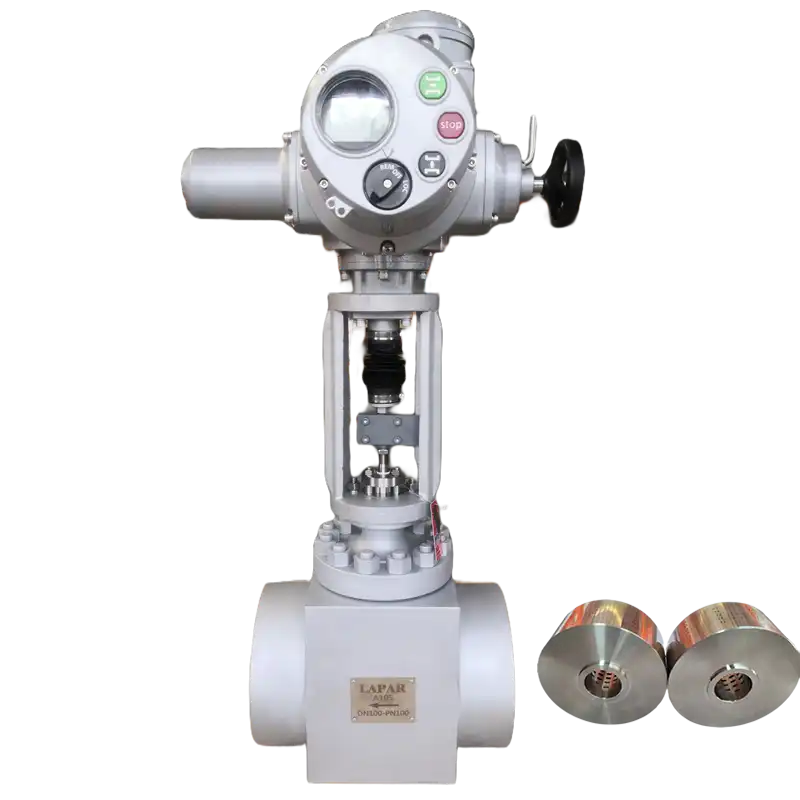
Fabricated Labyrinth Trim Anti-Cavitation Control Valve for High-Pressure Drop and Erosive Fluid Modulation in Critical Process Service
Product Description
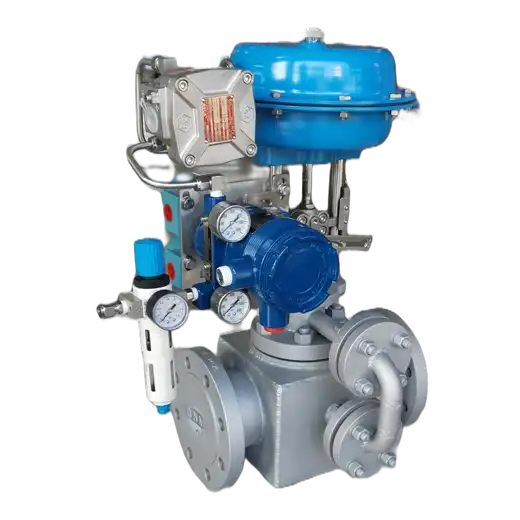
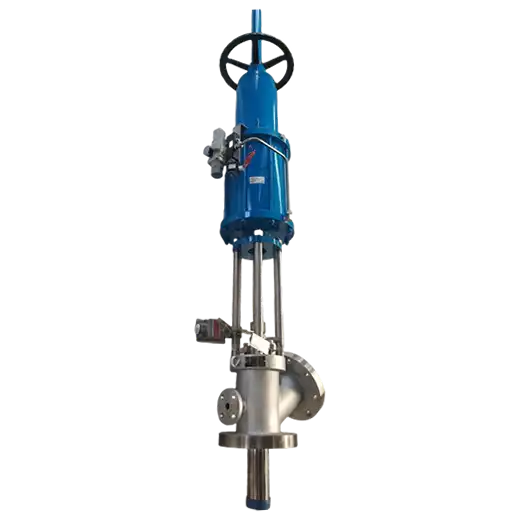
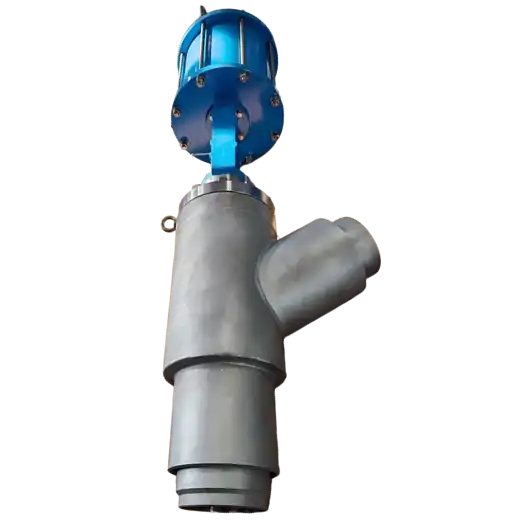
Labyrinth Trim Anti-Cavitation Control Valve for High-Pressure Drop and Erosive Fluid Modulation in Critical Process Service Basic Description Labyrinth trim anti-cavitation control valves employ multi-path, tortuous-flow restriction elements engineered to manage extreme pressure differentials without inducing destructive cavitation, flashing, or aerodynamic noise in liquid and two-phase service. Unlike single-stage orifice trims that concentrate entire pressure drop across one vena contracta, labyrinth trim distributes energy dissipation through dozens of parallel, precisely sized flow channels with controlled expansion zones that maintain local static pressure above fluid vapor pressure throughout the throttling path. This design eliminates vapor bubble formation and collapse at metal surfaces, preventing the pitting, vibration, and catastrophic trim failure that limit conventional valve life to weeks or months in high-ΔP applications such as boiler feedwater recirculation, desuperheater spray, amine letdown, and refinery hydroprocessing effluent control.
Key Features
- Multi-Channel Tortuous Path Geometry with Staged Pressure Recovery: Incorporates stacked-disk or monolithic labyrinth cages featuring 20–100+ discrete flow passages with calibrated diameters, lengths, and interstage volumes that enforce subsonic velocity limits and gradual pressure recovery, suppressing cavitation inception even at pressure drops exceeding 30 MPa and flow velocities above 50 m/s in water-like fluids.
- Erosion-Resistant Hardened Trim Materials with Precision Tolerances: Manufactures labyrinth elements from sintered tungsten carbide, hardened 440C stainless, or ceramic-coated alloys with channel tolerances held to ±0.02 mm and surface finishes below 0.4 µm Ra, ensuring consistent flow distribution and long-term anti-cavitation performance despite abrasive particulates, corrosive media, or cyclic thermal shock.
- Integrated Noise Attenuation Through Distributed Energy Dissipation: Reduces aerodynamic and hydrodynamic noise generation by 20–40 dB(A) compared to single-stage trims by eliminating turbulent jetting and shock-wave formation within the trim itself, often eliminating downstream silencers and reducing PPE requirements in occupied plant areas near high-energy letdown stations.
- Modular Cage Design for Field-Reconfigurable Flow Characteristics: Allows operators to adjust effective CV, inherent flow characteristic (linear, equal percentage, or custom), and number of active stages by replacing individual labyrinth disks or inserting blanking plates during routine maintenance, adapting valve performance to changing process conditions without full trim replacement or piping modifications.
- Max 100 tortuous flow path grades for labyrinth seal.
Typical Applications
- Boiler Feedwater Recirculation and Minimum Flow Protection: Controls high-pressure feedwater bypass flows at ΔP up to 35 MPa in supercritical and ultra-supercritical power units, where conventional trims suffer rapid cavitation erosion during low-load operation; labyrinth trim maintains stable modulation and protects pump seals from vapor-induced damage across entire turndown range.
- Desuperheater Spray Water Injection in Steam Systems: Regulates atomizing water flow into superheated steam headers at pressures above 20 MPa with precise droplet sizing and no flash-back, using labyrinth trim to prevent cavitation-induced spray pattern instability that causes thermal fatigue cracking in downstream piping and turbine blades.
- Amine and Glycol Letdown in Gas Treating Facilities: Manages rich solvent depressurization from absorber to regenerator at ΔP 10–25 MPa with dissolved acid gases and entrained solids, where labyrinth trim resists both cavitation and sulfide stress cracking while maintaining tight shutoff during standby periods to prevent cross-contamination.
- Hydroprocessing Reactor Effluent and Separator Level Control: Handles hot, hydrogen-rich hydrocarbon streams at 15–30 MPa differential with potential for flashing and particle erosion in refinery hydrotreaters and hydrocrackers, utilizing hardened labyrinth trim to survive combined cavitation-abrasion mechanisms that destroy standard cage-and-plug assemblies within a single run cycle.
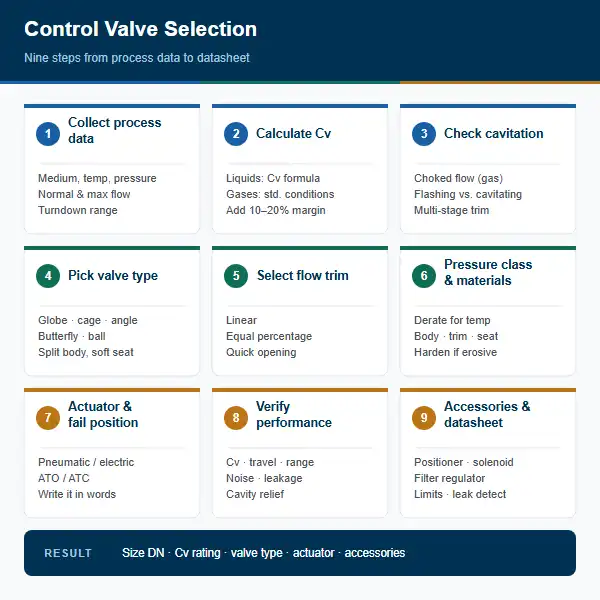
Selecting a labyrinth trim anti-cavitation control valve requires more than matching nominal size and pressure class; it demands rigorous hydraulic modeling of actual process transients, fluid thermophysical properties at operating extremes, and system impedance interactions to validate that staged pressure recovery remains effective under all credible upset and turndown scenarios. Our engineering approach integrates CFD simulation, field-proven trim libraries, and post-installation acoustic/vibration monitoring to deliver solutions that transform high-energy letdown points from chronic maintenance burdens into predictable, long-life assets—ensuring process stability, personnel safety, and asset availability in the most demanding fluid control environments worldwide.
Specifications
Valve Size:
NPS2 - NPS12;
DN50 - DN300
Pressure Class:
ASME Class 600 to 2500;
DIN PN100, PN160, PN250
Operating Temperature:
-29 to +590 °C / -20 to +1100 °F
Process Connection Type:
Flanged, Welding, NPT Threaded, Grayloc, Custom
Body Style:
Straight, Angle, 3-way, Y-Pattern, Fabricated, Steam Jacketed, Vacuum Jacketed
Valve Bonnet:
Standard, High Temperature, Cryogenic
Stem Seal:
Adjustable Packing
Seat Leakage:
Class III, Class IV, Class V according ANSI/FCI 70-2
Flow Characteristics:
Linear, Equal Percentage, Quick Open, Custom
Critical Service:
Noise Abatement, Steam Condition, Erosive, Low Flow, Corrosive, General Service, Outgassing, Flashing
Valve Actuator:
Electric, Hydraulic, Pneumatic, Electro-Hydraulic
Valve Accessories:
Pneumatic Positioner, Electro Pneumatic Positioner, Limit Switch, SOV, Air lock relay, Volume Booster, AFR, Position Transmitter
Certifications:
ANSI/ISA, ASME, NACE, PED, ATEX, SIL capable
Media:
Gases, Liquids, Water, Air
Industries:
Chemical/Petrochemical, Food & Beverage, Industrial Gases, Metals & Mining, Oil & Gas, Power, Pulp & Paper, Refining
Other Configurations:
Consult your local Lapar business partner or sales office to learn about additional specifications or options for this product.
Resources
Data Sheets:
Manuals: IOM
Product Photos: