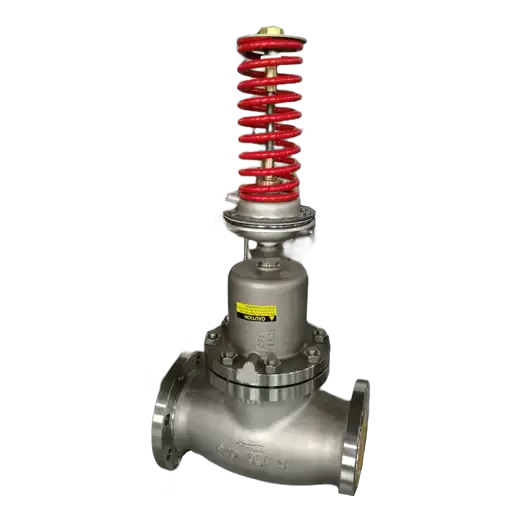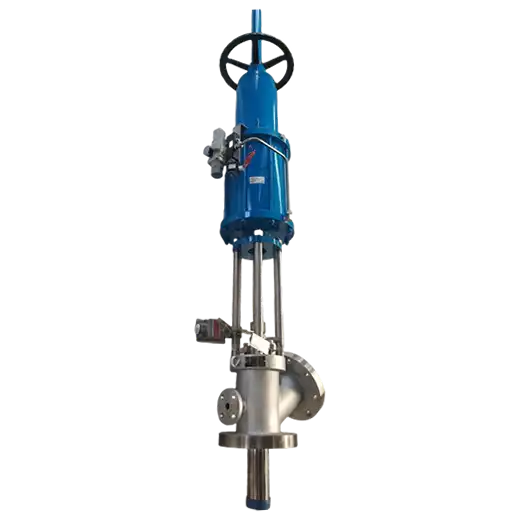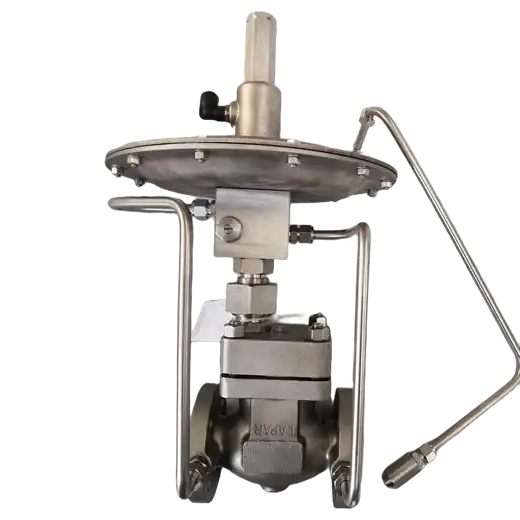
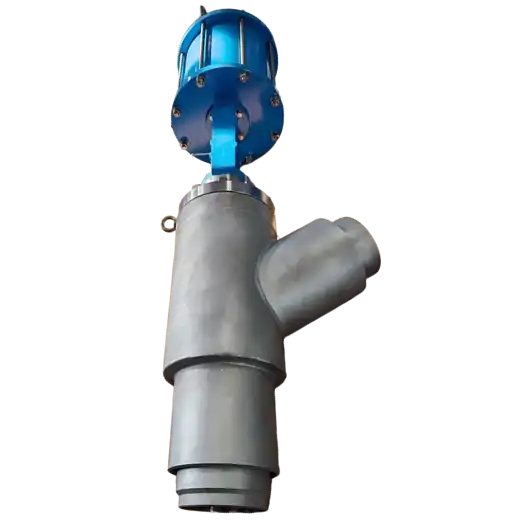
A melt control valve is a heated, close-tolerance control valve engineered for molten polymer and other high-viscosity fluid service, delivering precise pressure and flow modulation at temperatures up to 400 °C while preventing degradation, stall and thermal shock.
Product Description
Molten polymers, hot melts and other high-temperature viscous fluids behave unlike ordinary process liquids. Their viscosity falls steeply with temperature and rises steeply with any local cooling, so a stagnant pocket or an under-heated surface lets the melt freeze, bridge and stall the line. At the same time, prolonged residence in a hot, oxygen-exposed dead space causes thermal degradation — discoloration, gel formation and loss of molecular weight that ruins downstream film, fiber or pellet quality. Conventional control valves, built with labyrinth trim and generous cavities, are exactly wrong for this duty.
A melt control valve is purpose-built around those two constraints. The body and bonnet are heated — by an integrated steam or hot-oil jacket, or by electric cartridge heaters — so the entire flow passage holds a uniform, tightly controlled temperature from inlet to outlet. The internal geometry is streamlined and dead-volume-minimized: short, smooth passages and a close-clearance plug-and-seat keep residence time low and velocity predictable, so the melt moves continuously without overheating or stalling. Trim surfaces are hardened and polished to resist the abrasive filler, catalyst and polymer crumb that ride in the stream, and sealing is engineered for the low-leakage, frequent-cycling modulation that polymer lines demand.
Because the valve is part of a temperature-controlled system rather than a standalone trim, sizing and characteristic selection reference the actual melt viscosity, throughput and the pressure let-down the downstream extruder, gear pump or spinning manifold requires. Capacity is evaluated against polymer-specific rheology rather than water-based rules, and the heated envelope is matched to the fluid's freeze and degradation temperatures. The result is stable, repeatable pressure and flow at the die or manifold, consistent product quality, and a valve that stays in service instead of being dug out of a frozen line.
Key Features
- Uniform heated envelope: steam-, hot-oil- or electric-heated body and bonnet hold the full flow passage at a controlled, dead-space-free temperature to prevent freeze-off and degradation.
- Low-residence, streamlined flow path: short, smooth passages and close-clearance trim keep melt moving with minimal dead volume, avoiding thermal breakdown and bridging.
- Hardened, polished trim: Stellite- or carbide-faced, mirror-finished plug and seat resist abrasive filler, catalyst and crumb while holding tight modulation.
- Precise pressure and flow modulation: linear or equal-percentage characteristics tuned to polymer rheology deliver stable control at the extruder, gear pump or spinning line.
- Low-leakage, frequent-cycle seating: metal-to-metal or soft-seat options rated to ANSI/FCI 70-2 Class IV/V for the tight, repetitive throttling polymer service requires.
- Dead-space-free body: close-coupled, cavity-free construction eliminates the pockets where melt stalls, degrades and gels.
- System-matched integration: flanged or welded heated ends align with extruder discharge, gear pump outlet and manifold tie-ins, with positioner and closed-loop temperature control accessories.
Typical Applications
A melt control valve is a thermal and rheological device, not a standard trim with a heater bolted on. The freeze temperature, degradation window and viscosity curve of your specific polymer set the heating envelope, passage geometry and trim grade — what works for PET can char nylon or stall polyethylene. We match the heated body, flow path and characteristic to your actual melt data and downstream pressure requirement, so the valve holds stable pressure at the die instead of becoming the point where the line freezes or the product discolors. The outcome is consistent polymer quality and a valve that runs through the campaign rather than being cleared mid-run.
Technical Specifications
| Specification | Range / options |
|---|---|
| Valve size | NPS 1 – NPS 12 / DN 25 – DN 300 |
| Pressure class | ASME Class 150 to 600; DIN PN16 – PN100 |
| Operating temperature | up to +400 °C / +750 °F (to +450 °C on request) |
| Process connection | Flanged (RF), Butt Weld, heated bonnet tie-in |
| Body style | Globe, angle, Y-pattern, heated fabricated |
| Body material | 316 / 316L stainless, alloy 20, Hastelloy (corrosive melts) |
| Heating | Steam jacket, hot-oil jacket, electric cartridge heaters |
| Trim | Hardened, polished; Stellite / tungsten carbide overlay |
| Seat leakage | Class IV, Class V per ANSI/FCI 70-2 |
| Flow characteristics | Linear, Equal Percentage, Custom |
| Actuator | Pneumatic, Electric, Hydraulic, Electro-Hydraulic |
| Stem seal | Packing (bellows available) |
| Accessories | Positioner, Temp controller, Limit Switch, Transmitter |
| Certifications | ASME, PED, NACE (H₂S service), ATEX (flammable) |
| Media | Molten polymer, hot melt, PET, nylon, adhesives |
| Industries | Polymers, Fibers & Textiles, Petrochemical, Adhesives, Plastics |
Typical offering envelope. Final selection depends on throughput, melt viscosity and downstream pressure let-down; sizing is validated against your polymer data.
Resources
Data Sheets:
Manuals: IOM
Product Photos: