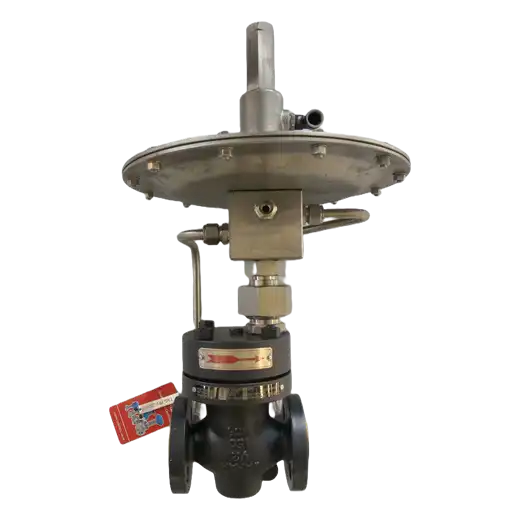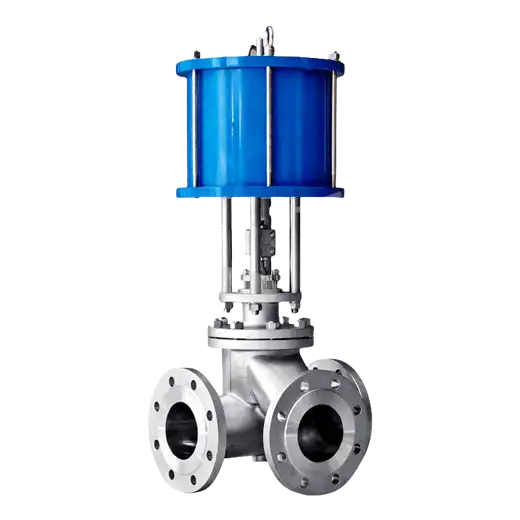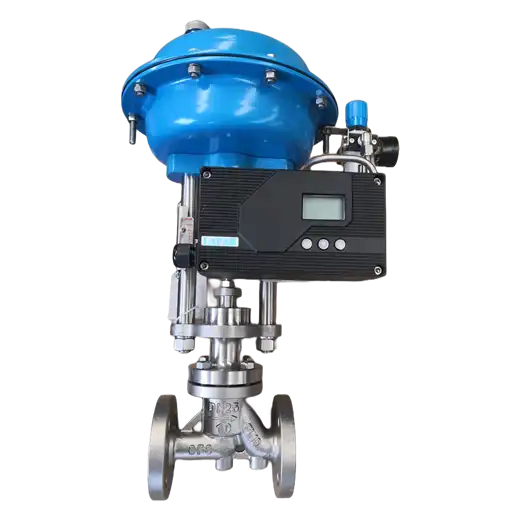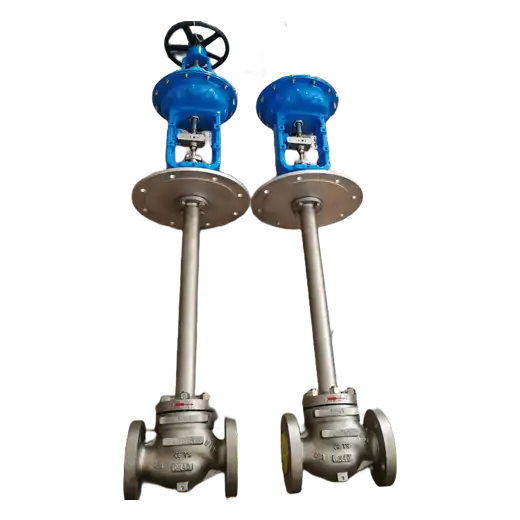
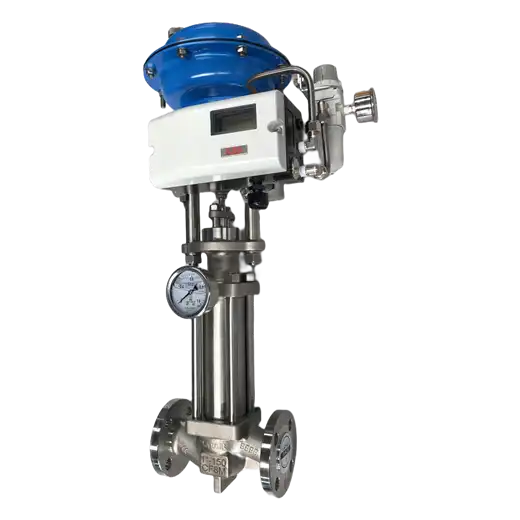
Bellows Bonnet Control Valve is a modulating valve whose stem is sealed by a hermetically welded metal bellows instead of by packing alone, giving zero stem leakage for toxic, carcinogenic, high-value and vacuum service, backed by safety packing and rated DN 25 to DN 300.
When the Specification Starts With a Standard
Most control valves are specified from the process: the engineer calculates the flow, the differential and the medium, and chooses a valve that controls it. A bellows bonnet valve is usually specified the other way round. It arrives in a data sheet because a regulation requires it, because a permit condition names it, because the corporate standard forbids packed stems on a particular list of substances, or because a previous audit finding has to be closed. Understanding that is what makes the valve sensible to buy, because once you know which requirement drove the specification you can also judge where a bellows is genuinely necessary and where a low-emission packing system would satisfy the same obligation at a fraction of the cost.
The mechanism is straightforward. In a conventional valve the stem passes through a bonnet and is sealed by a set of packing rings compressed into a stuffing box. Packing works well and is the correct choice for most services, but it is a dynamic friction seal: it wears, it relaxes under thermal cycling, and it permits a controlled small amount of leakage by design. A bellows replaces that arrangement with a welded metal element — multiple thin plies of stainless alloy or nickel alloy, welded at both ends — that flexes axially as the stem moves. There is no sliding contact and no path for process fluid to reach the atmosphere. Behind it sits a conventional packing set whose function has changed: it is no longer the primary seal but a safety device, containing the fluid if the bellows should ever fail and giving the operator a visible indication rather than an uncontrolled release.
What the bellows costs you is cycle life, and this is the single number that governs whether the valve suits your duty. Every stroke flexes the weld, and flexing fatigue is cumulative. A bellows rated for tens of thousands of full strokes will serve a valve that modulates a few times an hour for years, but the same bellows on a fast-acting loop running hundreds of cycles a day will fail in months — and it will fail at the weld, in the middle of the run, not at a convenient turnaround. Bellows construction also shortens the available stroke for a given bonnet height, adds cost, restricts the maximum temperature to what the bellows alloy and its weld can tolerate, and makes the valve heavier and longer than its packed equivalent. None of these are defects. They are the price of hermetic sealing, and they are the right price to pay when the medium is toxic, when product loss is expensive, or when vacuum integrity is required.
Because the requirement is compliance-driven, the documentation matters as much as the hardware. We supply the bellows rating and its tested cycle life, the material certificates for the bellows plies, the low-emission test record, the fugitive-emission conformity statement against the standard your site cites, and the safety-packing arrangement that provides secondary containment. Bellows bonnets are offered on single seat and double seat trim, in pressure-balanced and unbalanced configurations, with the full range of cage types and metallurgies used on our standard control valves — extended and cryogenic bonnet variants included. Send us the governing requirement, the medium and its hazard classification, the operating temperature, the differential pressure and, critically, the expected daily cycle count, and we will specify the bellows design that satisfies the obligation and survives the duty — or tell you where a TA-Luft rated live-loaded packing system would meet the same standard more economically.
Key Features
Primary Containment
- Hermetically Welded Multi-Ply Bellows — Multiple thin plies of 316L, 321, Inconel 625 or Hastelloy C276 welded at both ends form a pressure boundary that flexes axially with stem travel. There is no sliding stem contact and therefore no designed leakage path to atmosphere.
- Zero Stem Emission While Intact — With the bellows in service, stem leakage is nil rather than merely low. This is the property that distinguishes a bellows valve from even the best low-emission packing system.
- Vacuum Integrity in Both Directions — The seal holds against external atmosphere as well as internal pressure, so the valve can be specified for vacuum service and for applications where air ingress is as unacceptable as product loss.
Safety and Redundancy
- Safety Packing Behind the Bellows — A conventional graphite or PTFE packing set provides secondary containment if the bellows fails, and gives visible evidence of failure rather than an uncontrolled release. This arrangement is a requirement of several national and corporate standards, not an optional extra.
- Bellows Failure Detection Options — Leak-off ports, lantern-ring arrangements and monitoring connections can be provided so that incipient bellows failure is detected during the run instead of at the next inspection.
- Fail-Safe Actuation Retained — Spring-return fail-open, fail-close and fail-last-position action is unaffected by the bellows arrangement, so the safety function of the valve position in an emergency is preserved.
Compliance and Documentation
- Fugitive Emission Conformity — Tested and documented to ISO 15848-1 and TA-Luft (VDI 2440), with the conformity statement identifying the test standard, the test medium, the cycle count and the measured leakage rate.
- Full Material Traceability — Certificates for the bellows plies, body, trim and bolting; PMI verification available; NACE MR0175 / ISO 15156 compliance for sour service.
- Regulatory Marking — CE / PED 2014/68/EU conformity, ATEX compliance for explosive atmospheres, SIL-capable actuation and instrumentation, and fire-safe design available on request.
Control Performance Retained
- Full Range of Trim and Cage Types — Single seat and double seat trim, pressure-balanced and unbalanced plugs, standard window, multi-hole, drilled-hole and multi-stage cages. The bellows bonnet is a containment arrangement and does not restrict trim selection.
- Class IV, V and VI Seat Leakage — Per ANSI/FCI 70-2, with Class VI requiring a soft seat and therefore capping the operating temperature accordingly.
- Bonnet Variants for Extreme Temperatures — Extended bonnets keep the bellows away from high-temperature media; cryogenic extensions and austenitic bellows alloys serve down to -196 °C; finned bonnets for heat dissipation.
- Standard ISO 5211 Actuation Interface — Pneumatic diaphragm and piston actuators, electric actuators, hydraulic actuators and manual handwheels mount directly, with smart positioners, limit switches, solenoid valves, volume boosters, air-lock relays and air filter regulators.
Typical Applications
- Toxic and Highly Hazardous Chemical Service — Phosgene, chlorine, hydrogen cyanide, hydrogen sulfide, ammonia, hydrogen fluoride and similar media where any stem emission is a personnel exposure risk. The governing driver is normally a site standard or a national hazardous-substances regulation that prohibits packed stems on the substance list.
- Carcinogenic, Mutagenic and Reprotoxic (CMR) Substances — Handling of substances classified as CMR, where occupational exposure limits are at or near detection limits and leakage control is required to be engineered rather than managed. Hermetic sealing removes the stem as an exposure route.
- Fugitive Emission Reduction Programmes — Refinery and petrochemical sites operating under VOC or LDAR obligations, corporate zero-emission standards, or permit conditions citing ISO 15848-1 or TA-Luft. Specifying bellows valves on the identified leaking population closes audit findings at the engineering level.
- High-Value and Product-Loss-Sensitive Media — Expensive catalysts, fine chemical intermediates, specialty monomers and pharmaceutical actives where the product lost past a packed stem has a direct commercial cost, and where contamination of the packing box can also degrade the product.
- Vacuum and Inert-Atmosphere Processes — Vacuum distillation, thin-film evaporation, freeze drying and inert-blanketed reactors where air ingress through the stem seal would spoil the batch, oxidise the product or break the inert atmosphere. The bellows seals against the external atmosphere as effectively as against internal pressure.
- Nuclear, Radiation-Controlled and Critical Containment Duty — Services where the stem penetration is a containment boundary and secondary containment with leak detection is specified. Bellows construction with a monitored leak-off arrangement provides the detectable redundancy these standards require.
- Oxygen, Hydrogen and Reactive Gas Service — Oxygen clean and degreased construction for oxygen service, where a leaking packed stem admits contaminants; and hydrogen service, where the small molecule migrates through packing more readily than through a welded metal boundary.
- Polymerising, Crystallising and Fouling Media at the Stem — Services where product leaking past the stem polymerises or crystallises in the packing box, seizing the stem and destroying control. Hermetic sealing keeps the process fluid away from the stem seal entirely.
In every one of these services the specification was written by something other than the process: a substance list, an exposure limit, a permit condition, a corporate standard, an audit finding or a containment boundary. That is worth recognising, because it changes how the valve should be bought. Where the driver is a regulatory or corporate obligation, the bellows is not an option to be weighed against cost — it is the means of satisfying the obligation, and the questions become whether the bellows design is rated for the actual cycle life the duty demands and whether the documentation will satisfy the auditor. Where the driver is economic, product loss or vacuum integrity, the same questions apply but a TA-Luft rated live-loaded packing system may be a legitimate and far cheaper alternative. The parameter that decides it is the expected cycle count, because bellows life is a fatigue life measured in strokes and not in years. We specify from the governing requirement, the medium and its hazard classification, the operating temperature, the differential pressure and the daily cycle count, and we will recommend a packing-sealed valve where a bellows is not what your duty actually needs.
Technical Specifications
Size, Pressure and Temperature
Valve Size: DN 25 - DN 300 (NPS 1 - NPS 12); larger sizes on engineered request
Pressure Class: ASME Class 150 - Class 2500; DIN PN 16 - PN 400
Operating Temperature: -196 °C to +400 °C (-320 °F to +752 °F) standard bellows alloys; higher temperatures on engineered request, subject to bellows alloy and weld capability
Valve Style: Straight (globe) pattern, Angle pattern
Bellows Design and Rating
Bellows Type: Multi-ply welded metal bellows, hermetically sealed at both ends
Bellows Materials: 316L, 321, 347, Inconel 625, Hastelloy C276, Monel 400, Titanium
Ply Count: Multi-ply construction selected against pressure rating and required cycle life
Rated Cycle Life: Specified in full strokes at the declared travel and pressure; confirmed per duty — supply your expected daily cycle count
Safety Packing: Graphite or PTFE packing set downstream of the bellows providing secondary containment and visible failure indication
Failure Detection: Leak-off port, lantern ring or monitoring connection available
Stroke Consideration: Available stroke is reduced relative to a packed bonnet of the same overall height; long-stroke duties require a correspondingly longer bellows and bonnet
Trim and Flow Control
Trim Type: Single seat and double seat plug, cage guided; pressure-balanced and unbalanced
Cage Configuration: Standard window, Multi-hole, Drilled-hole multi-stage, Contoured plug, Micro-flow / low-Cv trim
Flow Characteristic: Linear, Equal Percentage, Quick Opening, Custom characterized profile
Seat Leakage: Class IV, Class V, Class VI per ANSI/FCI 70-2 — Class VI requires a soft seat and caps operating temperature
Stem Emission: Zero with bellows intact; secondary containment by safety packing
Turndown Capability: up to 50:1 with characterized trim and positioner; higher on micro-flow trim
Body and Trim Materials
Body Materials: WCB, WC6, WC9, LCB, LCC, CF8, CF8M, CF3M, A890 4A / 5A duplex and super-duplex, Alloy 20, Hastelloy C276, Monel 400; A182 F316 / F22 forgings for higher classes
Trim Materials: 316 / 316L, 410, 420, 17-4PH, Alloy 6 (Stellite) hard-faced, solid Stellite 6, Hastelloy C276, Inconel 625 / X-750
Stem Material: 316, 17-4PH, 410, Inconel X-750 — nitrided or hard-chromed, surface finish controlled for safety packing life
Bonnet Materials: Matched to the body; bellows plies certified separately
Bonnet, Connections and Sealing
Bonnet Type: Bellows bonnet with safety packing; Extended (high temperature), Cryogenic (low temperature), Finned, Bellows with heat-dissipating extension
End Connections: Flanged (ASME B16.5 / B16.47, DIN EN 1092-1), Ring Type Joint (RTJ) per ASME B16.20, Butt-weld, Socket-weld
Bonnet Joint: Bolted with die-formed graphite or spiral-wound gasket; welded bonnet available for permanent hermetic construction
Special Preparations: Oxygen-clean and degreased, cryogenic degreased, low-temperature impact tested
Face-to-Face: IEC 60534-3-2 / ISA 75.01, EN 558
Actuation and Instrumentation
Actuator Type: Pneumatic diaphragm, Pneumatic piston (single- and double-acting, spring return), Electric, Electro-Hydraulic, Manual handwheel
Fail Action: Fail Open, Fail Close, Fail Last Position — unaffected by the bellows arrangement
Topworks Interface: ISO 5211 / standard yoke mounting
Accessories: Smart positioner (4-20 mA / HART / Foundation Fieldbus / Profibus), Electro-pneumatic positioner, Limit switch box, Solenoid valve, Air filter regulator, Volume booster, Air lock relay, Position transmitter, Manual override, Locking device
Standards, Testing and Certification
Design Standards: IEC 60534, ASME B16.34, EN 12516, ASME B16.5 / B16.20 / B16.47 for connections
Emission Standards: ISO 15848-1, TA-Luft (VDI 2440), ISO 15848-2 production verification testing on request
Testing Standards: ANSI/FCI 70-2 seat leakage, API 598, IEC 60534-1, EN 12266-1, ISO 5208
Bellows Testing: Cycle life testing to the declared rating; hydrostatic and helium leak testing of the welded bellows assembly
Certifications: CE / PED 2014/68/EU, ATEX, ISO 9001, NACE MR0175 / ISO 15156, SIL-capable, Fire-safe design on request, Material traceability with PMI verification
Service Conditions and Media
Media: Toxic and highly hazardous chemicals, CMR substances, Carcinogens, Volatile organic compounds, High-value intermediates and catalysts, Oxygen and hydrogen, Reactive gases, Polymerising and crystallising fluids, Vacuum and inert-atmosphere processes
Critical Service: Zero emission required, Fugitive emission control, Vacuum integrity, Personnel exposure control, Product loss prevention, Containment boundary, Air ingress prevention, Stem fouling avoidance
Industries: Chemical and Specialty Chemicals, Petrochemical and Refining, Pharmaceuticals, Fine Chemicals, Industrial Gases, Nuclear and Radiation-Controlled Processes, Semiconductor, Pulp and Paper, Water Treatment
Selection Basis: A bellows is a fatigue element, not a pressure vessel. Its governing limit is rated cycle life at the declared travel and pressure — not its pressure rating, which is normally ample. Specify from the expected daily or annual cycle count, the required stroke and the operating temperature. A bellows that serves a slowly modulating valve for years will fail in months on a fast-acting high-cycle loop, and it will fail at the weld during the run rather than at a planned shutdown.
When a Packing-Sealed Valve Is the Better Buy: Low-cycle or slow-modulating duty where product loss and emission are not critical; services where a TA-Luft or ISO 15848-1 rated live-loaded packing system already satisfies the governing standard at substantially lower cost; duties requiring long stroke in a restricted envelope; and applications where the medium contains solids that would abrade or fatigue the bellows externally. In these cases we will quote the packing-sealed valve and explain why.
Bellows Limitations to Plan For: Reduced available stroke for a given bonnet height; lower maximum temperature than the equivalent packed bonnet, set by the bellows alloy and its weld; greater overall length and weight; higher cost; and vulnerability to external mechanical damage and to solids accumulation on the bellows convolutions.
Other Configurations: Consult our engineering team for sizes above DN 300, pressures above Class 2500, exotic bellows alloys, welded bonnet construction, double-bellows arrangements with interstitial monitoring, extended or cryogenic bonnets, or complete actuated assemblies with positioners and accessories.
Frequently Asked Questions
What is the difference between a bellows sealed and a packing sealed control valve?
A packing sealed valve slides the stem through a stuffing box of compressed packing rings, which is a dynamic friction seal that wears, relaxes under thermal cycling and permits a small designed leakage rate. A bellows sealed valve welds a multi-ply metal bellows to the stem and bonnet so the element flexes axially instead of sliding, eliminating the stem as a leakage path entirely. Behind the bellows sits a safety packing set that provides secondary containment and gives visible evidence if the bellows ever fails.
How long does a bellows last, and what determines its life?
Bellows life is a fatigue life measured in strokes, not in years. It is determined by the number of flexing cycles, the travel per cycle, the pressure across the bellows, the operating temperature and the bellows alloy and ply count. A valve modulating a few times an hour may run for many years on the same bellows that would fail within months on a fast-acting loop cycling hundreds of times a day. This is why we ask for your expected daily cycle count before specifying, and it is the parameter most often overlooked when a bellows valve is chosen.
Is a bellows valve always the right answer for fugitive emission control?
No. A live-loaded low-emission packing system tested to ISO 15848-1 or TA-Luft satisfies most fugitive emission obligations at a substantially lower cost, with no cycle-life limit and no stroke penalty. A bellows is the correct choice when the requirement is genuinely zero stem emission — toxic or CMR media, vacuum integrity, oxygen or hydrogen service, containment boundaries, or media that would foul and seize a packing box. Tell us which standard or obligation your specification cites and we will advise whether a bellows is required to meet it or whether a rated packing system would do.
What are the practical limitations of a bellows bonnet?
Four, and all are inherent rather than defects. Available stroke is reduced for a given bonnet height, so long-stroke duty needs a longer bellows and a taller valve. Maximum temperature is lower than the equivalent packed bonnet, set by the bellows alloy and its weld. The valve is longer, heavier and more expensive. And the external convolutions are vulnerable to mechanical damage and to solids accumulation. On low-cycle duty with a clean medium none of these matter; on high-cycle, long-stroke or solids-laden duty they decide the specification.
Can a bellows bonnet be fitted to any control valve trim?
To most, yes. The bellows bonnet is a containment arrangement and does not restrict trim selection: it is offered on single seat and double seat trim, in pressure-balanced and unbalanced configurations, with standard window, multi-hole, drilled-hole multi-stage and micro-flow cages, and across the full body metallurgy range. Where the combination of very high temperature, very long stroke or very high cycle count conflicts with bellows capability, we will say so and propose an alternative rather than supply a valve that will not survive the duty.
Resources
Data Sheets:
Manuals: IOM
Product Photos: