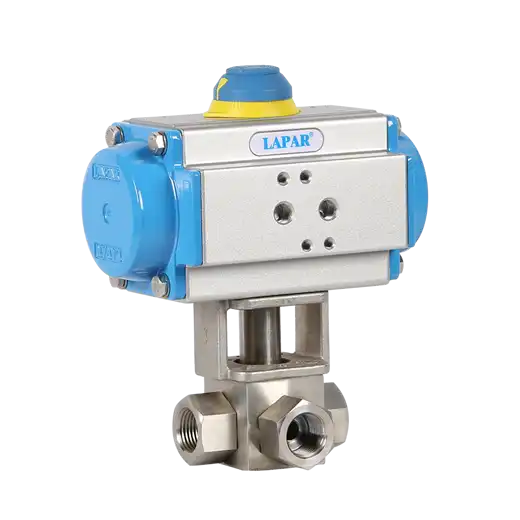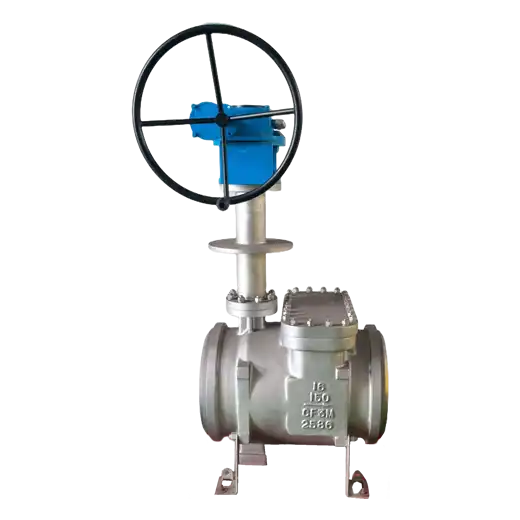
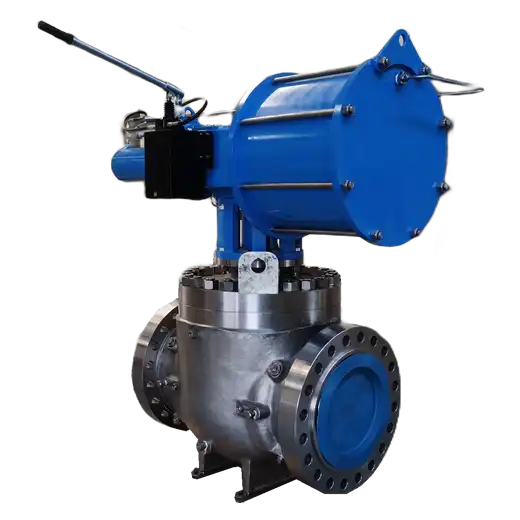
Top entry ball valve is a quarter-turn isolation valve whose body is made as a single piece with a bolted closure on top, so the ball, seats and stem are withdrawn vertically without taking the valve out of the pipeline.
Product Description
The reason to buy this valve has nothing to do with how well it shuts off and everything to do with what happens when it eventually needs work. On a side-entry valve the internals come out through the body joint, which means the body has to come out of the line first. On a small flanged utility line that is an hour with a spanner. On a butt-welded valve in a buried pipeline, a high-consequence hydrocarbon line, or any line where removing equipment requires a hot work permit, it is a different job entirely: cut out the valve, weld in a replacement, radiograph the welds, hydrotest the spool, restore coating and backfill. Days of work, a permit, an inspection record and a shutdown window, to replace a seat that costs a fraction of that. A top entry valve keeps the body welded in place and lifts the trim out through the top, so the same repair is a bonnet unbolt.
The same construction also changes the pressure boundary. A split-body valve carries a body joint in addition to its bonnet joint, and that body joint — gasket, bolts, and a long sealing line — is the classic starting point for leakage under pressure and thermal cycling. A one-piece top entry body removes it. Being straight about the trade: a joint has not been eliminated, it has been consolidated into the bonnet closure, which is larger and is the joint that gets deliberately opened during service. Fewer joints on the pressure boundary, and the remaining one is the one designed to be maintained, is the honest way to state the benefit. It is not "zero leak paths".
Worth saying plainly, because this valve is sold as an upgrade when it often is not one: specify top entry when removing the valve from the line is expensive, not because top entry is inherently better. The construction costs more, weighs more and stands taller than an equivalent side-entry valve. On a flanged line where the valve can simply be unbolted, a side-entry valve does the same job for less money, and the top entry feature buys you nothing you can use. The feature earns its cost when the ends are welded, when the valve is buried or enclosed, when a hot work permit is slow or restricted, or when the maintenance window is measured in hours and a weld repair cannot fit inside it. That is a decision about the installation, not about the valve in isolation.
One installation requirement gets missed more often than any other: the trim comes out upward, so the valve needs clear space above it. Withdrawing the ball and stem assembly generally needs a full bonnet height or more of headroom, and anything overhead — a pipe run, a cable tray, a structural member, a valve operator on another line — turns a maintainable valve into one that has to be cut out after all. Checking the vertical envelope is part of specifying this valve, not part of installing it, and it is the single most common way the top entry advantage gets thrown away.
Beyond access, the rest of the specification is the usual ball valve list, and it should be settled rather than defaulted. Bore first: full bore for pigging and unrestricted flow, reduced bore where pressure drop and weight matter more. Ball mounting next, trunnion or floating, which is what sets operating torque and whether the seats carry line load. Then seat material against temperature and fluid condition, cavity relief for any duty that can trap liquid in a closed ball, and the baseline safety items — blowout-proof stem and an antistatic path between ball, stem and body — which are requirements on hydrocarbon and dry gas service rather than options.
Key Features
- In-line maintenance: ball, seats and stem withdraw vertically through the bonnet with the body left welded in the line — no cutting, no hot work permit, no weld repair, no hydrotest.
- One-piece body: no split-body joint on the pressure boundary, removing the gasket-and-bolt line that is the usual starting point for leakage under thermal cycling.
- Built for welded ends: the construction exists for installations where the valve cannot be unbolted — buried, enclosed, or permanently welded into the pipeline.
- Single maintained joint: pressure boundary consolidated into the bonnet closure, which is the joint designed to be opened and re-made, rather than a body joint that is never meant to be disturbed.
- Full bore or reduced bore: selected against whether the line is pigged and how much pressure drop and weight the installation can carry; full bore leaves an unobstructed passage and the lowest pressure drop in the range.
- Seats matched to temperature: PTFE to +120 °C, Nylon to +80 °C, PEEK to +250 °C, PPL to +250 °C — chosen against working temperature rather than defaulted.
- Class VI shutoff: soft-seated construction to Class VI per ANSI/FCI 70-2.
- Ball mounting to suit duty: trunnion or floating, which fixes operating torque and actuator size.
- Blowout-proof stem and antistatic path: stem retained from inside the body with electrical continuity between ball, stem and body — baseline for hydrocarbon and dry gas service.
- Cavity pressure relief: seat design or external relief for liquid trapped in a closed ball, addressing the thermal expansion load the body was not rated for.
Typical Applications
- Oil and gas transmission pipelines — mainline block valves welded into the line, where cutting out a valve means a shutdown and a permit rather than a spanner.
- Buried and enclosed installations — valve pits, chambers and underground headers where access is restricted and removal is disproportionate to the repair.
- Refinery and petrochemical welded headers — high-consequence process lines where a weld repair costs far more than the valve.
- Compressor and pump station piping — isolation on station headers where the maintenance window is short and hot work is controlled.
- Storage terminals and tank farm manifolds — welded block valves on receipt and dispatch headers with limited outage time.
- High-pressure gas distribution and city gate stations — permanent installations where the line is rarely taken out of service.
- Process lines requiring minimum shutdown — any duty where the cost of the outage exceeds the cost of the valve by a wide margin.
- Chemical and fertilizer service — nitric acid, strong oxidizing media and urea, on stainless steel construction with the seat selected against concentration and temperature.
- Steam, water and general utility headers — welded or flanged block isolation up to the seat temperature limit of the specified seat material.
Specify this valve in a fixed order, because the first question decides whether the rest is worth paying for. Start with the end connection: if the ends are welded or the valve cannot be removed, top entry pays for itself; if it is flanged and unboltable, it probably does not. Then fix size and pressure class, which sets the body; pick full or reduced bore against pigging and pressure drop; match the seat to temperature and fluid; and confirm the vertical clearance above the bonnet before the layout is frozen. Send us the end connection, size, pressure class and temperature, and we will confirm body, bore, mounting and seat against them rather than quoting a top entry valve where a side entry one would do.
Technical Specifications
| Valve Size | NPS 2 to NPS 36 / DN 50 to DN 900 |
|---|---|
| Pressure Class | ASME Class 150 to 900 |
| Working Temperature (by seat) | PTFE up to +120 °C | Nylon up to +80 °C | PEEK up to +250 °C | PPL (polyphenylene) up to +250 °C | minimum temperature |
| Body Construction | One-piece body with bolted top closure — top entry |
| Maintenance Access | In-line: ball, seats and stem withdraw through the bonnet without removing the body from the line |
| End Connection | Flanged, Butt Weld |
| Port Type | Full bore or reduced bore |
| Ball Mounting | Trunnion mounted or floating |
| Body Material | Carbon steel, stainless steel |
| Seat Material | PTFE, Nylon, PEEK, PPL |
| Seat Leakage | Class VI per ANSI/FCI 70-2 (often cited as ANSI B16.104 Class VI) — soft-seated construction |
| Stem Design | Blowout-proof stem, antistatic device |
| Operation | Manual lever, Worm gear, Pneumatic actuator, Electric actuator |
| Installed Clearance | Vertical clearance above bonnet required for trim withdrawal |
| Design and Ratings | Buyers specify this valve type to API 6D or API 608, ratings per ASME B16.34, ends per ASME B16.5 / B16.25 — list only what LAPAR documentation supports |
| Certifications | Fire-safe (API 607 / API 6FA), fugitive emissions (ISO 15848-1), sour service (NACE MR0175 / MR0103) — publish only where test reports exist |
| Media | Oil, Gas, Water, Steam, Nitric Acid, Strong Oxidizing Media, Urea |
| Industries | Oil & Gas Transmission, Pipelines, Refining & Petrochemical, Chemical & Fertilizer, Power, Water |
Frequently Asked Questions
What makes a top entry ball valve different from a side entry one?
Access. On a side entry valve the internals come out through a body joint, so the body has to come out of the line first. On a top entry valve the body is one piece with a bolted closure on top, so the ball, seats and stem lift out vertically with the body left in place. The construction also removes the split-body joint from the pressure boundary, leaving the bonnet closure as the joint that gets maintained.
Can it really be serviced without taking it out of the line?
Yes, provided the installation allows it. The bonnet is unbolted and the trim is withdrawn upward. The two things that defeat this are welded-body designs being handled as if they were not, and insufficient headroom above the valve — if there is a pipe run or structure overhead, the trim cannot come out and the valve has to be cut from the line after all.
Is top entry always the better choice?
No. It costs more, weighs more and stands taller than an equivalent side entry valve, and on a flanged line that can simply be unbolted the extra cost buys nothing usable. Specify it where removing the valve is expensive — welded ends, buried or enclosed installation, restricted hot work, or a maintenance window too short for a weld repair. That is a judgement about the installation, not about the valve on its own.
How much space does it need above the valve?
Enough to withdraw the ball and stem assembly, which generally means a bonnet height or more of clear space, measured from the top of the bonnet with the operator removed. Check this at layout stage: overhead piping, cable trays and structural steel are the most common reasons a maintainable valve ends up being cut out instead. Give us the installation detail and we will confirm the required dimension.
Full bore or reduced bore, and which should I pick?
Full bore gives an unobstructed passage, so the line can be pigged and flow is unrestricted; it is the default for transmission and pigged pipelines. Reduced bore is lighter and cheaper and is acceptable where pigging is not required and the added pressure drop is acceptable. Decide on pigging first — it usually settles the question.
Which seat material should I specify?
Temperature decides it. Nylon covers up to +80 °C, PTFE up to +120 °C, and PEEK or PPL up to +250 °C. Note that the two high-temperature options sit well clear of the other two, so a duty at 150 °C removes half the list rather than narrowing it marginally. Where the medium is aggressive, check the seat against concentration and temperature as well as the body material — a listed medium is a starting point for selection, not a compatibility guarantee.
What does Class VI seat leakage mean?
Class VI is the tightest of the standard control-valve seat leakage classes, defined by a bubble-count test rather than a percentage of capacity, and it is achieved with soft seating — which is what PTFE, Nylon, PEEK and PPL all are. It is therefore consistent with the seat options offered here, and it should not be expected from a metal-seated construction. Pressure class, seat material and size all influence what is achievable, so confirm the test basis when shutoff is the driving requirement.
Does it meet API 6D and fire-safe requirements?
Top entry ball valves for pipeline duty are commonly specified to API 6D with fire-safe testing to API 607 or API 6FA, and ratings to ASME B16.34. What is published on this page should be limited to what LAPAR documentation and test reports actually support — confirm current compliance status before quoting, and do not assume fire-safe performance is included by default.